City Tech Library Awarded American Libraries Association Building Library Capacity Grant

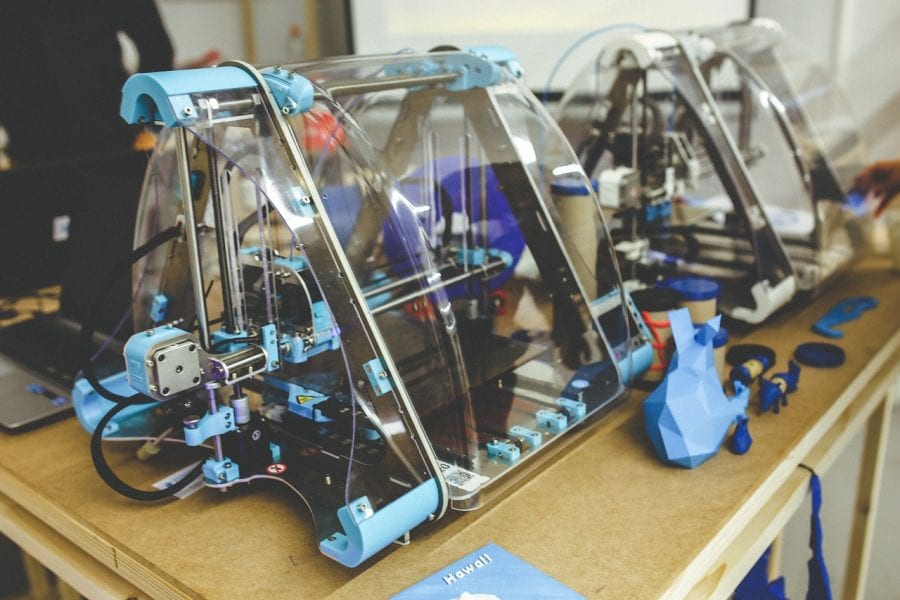
turntable
Turntable” by Andrew Malone is licensed under CC BY 2.0

The Ursula C. Schwerin Library was one of 17 libraries nationwide awarded an American Libraries Association (ALA) Building Library Capacity Grant. The $10,000 grant is intended to “improve technology access “broaden technology access, develop collections, provide digital instruction, increase staffing, and expand outreach, or maintaining or amplifying other existing service strategies or adding new ones.” Prof. and Interim Chief Librarian Anne Leonard, Prof. Monica Berger, and Prof. Junior Tidal co-wrote the grant proposal.

The grant will provide the City Tech community access to equipment that they can borrow. The focus is primarily on audio technology, including podcasting kits, a podcasting booth, for students and faculty to create their own podcasts, portable turntables to listen to the library’s vinyl LP collection, as well as funding to add more albums to the collection. The library is planning to collect student input for album recommendations, as to reflect the broad diversity of the City Tech community.

ALA has provided a list of grant awardees and projects.

For more information, contact either Profs. Anne Leonard, Monica Berger, or Junior Tidal.

The Ursula C. Schwerin Library is Accessible For All

The City Tech Library has revamped their Libguide collection making it more accessible for everyone.

The Ursula C. Schwerin Library is committed to developing equitable online spaces and included an accessibility focus within their June initiatives. According to the American College Health Association, 12% of undergraduate students reported having a disability, and recent data found that almost 13% of the U.S. population has a disability. While improving accessibility directly benefits those with disabilities, web accessibility benefits all users by removing restrictions on who can access information. This inclusive approach broadens access, increases participation, and promotes usability.

 A library’s Libguide collection would ideally follow WCAG guidelines and offer resources that are user friendly, accessible, well designed, and findable. The City Tech Libguide Collection includes over fifty research guides on relevant subjects.  

Screenshot of the library's LibGuide page, showing a list of LibGuides by subject.

Adjunct librarians working in the library tackled this initiative through an assessment process that focused on accessibility aspects like alt text and screen reader capability. To conduct an audit of the Libguides, code inspection tools were utilized, rendering valuable information on accessibility errors. Two separate inspection tools found over 200 errors across ten guides. These errors ranged from low contrast, and missing corresponding labels, to dozens of images that were missing alt text.

Our audit-based suggestions included solutions to improve usability and ensure future accessibility errors do not occur. Improved guides were designed to mitigate and address  accessibility issues pertaining to readability and inconsistency with navigation. The following Libguides have been coded and redesigned for inclusivity and accessibility:

Our Libguide collection offers an extensive catalog covering various topics and subject matters. Libguides are typically developed by academic librarians to help staff and students navigate resources and find information. Academic libraries have a responsibility to withhold accessibility standards for everyone’s access. This process is an ongoing endeavor that requires libraries to proactively address current content and responsively create new and accessible content. If you’re interested in seeing more Libguides- be sure to check out the full collection here.

The Library’s First Video Display – College Assistant Picks

Sign for the new video display.

The City Tech Library has a new display curated by College Assistants working in the library this summer. Films on the display are available for check out, and is located at the main entrance of the Ursula C. Schwerin Library.

There are a variety of films in the display, from major theatrical releases to independent documentaries, and everything in between.

The collection was developed under the guidance of Profs. Nora Almeida, Jen Hoyer, and Junior Tidal.

For more information, feel free to contact Prof. Junior Tidal.

Books for Asian American Pacific Islander Month

Japanese Wave Pattern
Shisma, CC BY-SA 4.0, via Wikimedia Commons

May is Asian American Pacific Islander (AAPI) Heritage Month. Originally designated as a week by President Carter in 1978 and observed the following year, President George H. W. Bush designated it as a month in 1992.

The Ursula C. Schwerin Library has a book display to celebrate the month long observance. You can view the display in the coming weeks which features a variety of books from the library’s collection, including non-fiction, fiction, cookbooks, and more. Until then, the City Tech community may view the available books through this digital collection, which was curated by Prof. Junior Tidal and implemented by Jen Hoyer.

Additionally, the library has a streaming video collection that celebrates AAPI month, and the City Tech AAPI Faculty and Staff Association are hosting a number of events , including a film screening, a bystander intervention training to combat anti-Asian violence, and an art exhibit, to mark the occasion.

Streaming Films for Asian American Pacific Islander Heritage Month

May is AAPI month. City Tech students, staff, and faculty can celebrate with these streaming film selections:

Blue Bayou
As a Korean-American man raised in the Louisiana bayou works hard to make a life for his family, he must confront the ghosts of his past as he discovers that he could be deported from the only country he has ever called home.

Blue Bayou trailer

Boogie

Alfred “Boogie” Chin is a talented high school basketball player from Queens, New York, who dreams of playing in the NBA. His parents, however, have a different plan for him: they want him to focus on getting a scholarship to an elite college instead. While already burdened with high expectations, he finds himself struggling more as he tries to navigate high school, a new girlfriend, and fierce on-court rivals.

Boogie trailer

Crazy Rich Asians

“Crazy Rich Asians” follows native New Yorker Rachel Chu (Constance Wu) as she accompanies her longtime boyfriend, Nick Young (Henry Golding), to his best friend’s wedding in Singapore. Excited about visiting Asia for the first time but nervous about meeting Nick’s family, Rachel is unprepared to learn that Nick has neglected to mention a few key details about his life. It turns out that he is not only the scion of one of the country’s wealthiest families but also one of its most sought-after bachelors. Being on Nick’s arm puts a target on Rachel’s back, with jealous socialites and, worse, Nick’s own disapproving mother (Michelle Yeoh) taking aim. And it soon becomes clear that while money can’t buy love, it can definitely complicate things.

Everything Everywhere All at Once

Grappling with the onset of middle age, a Chinese immigrant discovers that she can traverse across time and space. Teaming up with her alternate lives, the unlikely allies realize that they alone possess the power to protect the world from calamity, plunging them into the midst of an outlandish quest.

Everything Everywhere All At Once Trailer

Rising Against Asian Hate: One Day in March

Following the aftermath of the March 2021 mass shootings at three spas in Atlanta, this film chronicles how the Asian American community came together to fight back against hate. Offering a conversation about race, class and gender, the film takes a deep dive into this critical moment of racial reckoning, exploring the struggles, triumphs and achievements of AAPI communities.

Good Americans

This series traces the story of Asian Americans, spanning 150 years of immigration, racial politics, and cultural innovation. It is a timely look at the role that Asian Americans have played in defining who we are as a nation. During the Cold War years, Asian Americans are simultaneously heralded as a Model Minority, and suspected as the perpetual foreigner. It is also a time of ambition, as Asian Americans aspire for the first time to national political office.

Need a laptop? Check one out in the library!

Coding Javascript by Christaan Colen is licensed under CC-BY SA.

The library offers laptop loans to all enrolled City Tech students! Stop by the library’s Multimedia Resource Center. It is located on the 4th floor, to the left of the library’s entrance.

Laptops can be borrowed for 1 week from the library. You can check one out with your City Tech ID.

For questions or concerns, contact Prof. Junior Tidal, Web Services & Multimedia Librarian.

Wakanda Forever! Tár! New Films in Swank for Spring 2023

There are numerous new films for the spring 2023 semester through the library’s electronic resource, Swank, including recent theatrical releases, Oscar nominees (like Everywhere, Everything, All At Once), and timely documentaries. City Tech students and faculty can access Swank on or off-campus using your CUNYfirst credentials.

Below are some highlights. For more information about these films, Swank, or other streaming films available to the City Tech community, reach out to Prof. Junior Tidal.

Continue reading “Wakanda Forever! Tár! New Films in Swank for Spring 2023”

Winter Holiday Cookbooks #2: Christmas

Picture of festive holiday drinks
Happy Holidays!

Many New Yorkers from different cultural backgrounds will soon celebrate Christmas Eve and Christmas with big, multi-course feasts. One of the most elaborate is The Feast of the Seven Fishes, an Italian-American Christmas Eve celebration. It may include seven or more specific fish dishes, such as whiting in lemon, clams in spaghetti, or baccalà (dried, salted cod). If you ever want to try to create your own feast, there are several pesci recipes in Canal House Cooking: Pronto! for you to try.

Filipinos celebrate Christmas from December 16 until the first Sunday of January and the Feast of the Three Kings. After Christmas Eve midnight mass, preparation begins for Noche Buena, when family, friends, and neighbors drop by for an open house celebration. Food is often served in buffet style. Among the typical foods prepared are lechon (roasted pig), queso de bola, ham, spaghetti, and fruit salad. Filipino Family Cookbook : A Treasury of Heirloom Recipes and Heartfelt Stories is a great resource if you’d like to learn more.

For many Latinos in the United States, the holiday season is synonymous with tamales. Mexican Americans often opt for corn-husk-wrapped tamales, while those from Central America typically wrap theirs in banana leaves. And while most Mexican and Central American tamales contain corn-based masa, Puerto Rican pasteles don’t use any, instead using a combination of ground yautía (yuca) and green plátanos (plantains). Tamales, Comadres, and the Meaning of Civilization is filled with family recipes and stories. It also celebrates tamaladas, large family gatherings to prepare the Christmas tamales.

There are many special desserts traditionally made at Christmas, such as German Stollen, Spanish Turrón, French Bûche de Noël, and Italian Panettone and Struffoli. The United States is best known for its varied Christmas cookies that reflect America’s immigrant heritages. City Tech Professor Michael Krondl is a culinary historian and the author of Sweet Invention: A History of Dessert. You can listen to his interview on The Takeaway about the history of Christmas cookies. For your own holiday cookie baking, take a look at The Great Minnesota Cookie Book : Award-Winning Recipes from the Star Tribune’s Holiday Cookie Contest.

This post is an excerpt from this blog originally published in December 2021. It was co-authored by Monica Berger.

Winter Holiday Cookbooks #1: Hannukah

Traditionally, holidays are times when families, friends, and communities come together, with food playing an essential role in celebrations. In New York City, people from many different cultures celebrate the winter holidays with unique foods. This first of three posts covering Hannukah, Christmas, and Kwanzaa, will help a “give a taste” of the diverse dishes being served this season. Here are just a few holiday highlights, as well as a selection of e-cookbooks available through the library.

The post below is an excerpt from this blog originally published in December 2021.

Potato Latkes on a white dish with a side of stewed apples or compote
Mark Mitchell, Potato Latkes, CC BY 2.0 , via Wikimedia Commons

Hannukah 

Hannukah 2022 starts at sunset on December 18. Hannukah is an eight-day festival of lights commemorating the miracle when—after the Second Temple was desecrated then rededicated—one day’s worth of sacred oil for the altar’s eternal lamp lasted eight days. The eight-night celebration of Hanukkah is therefore supposed to include fried foods at the festive meal that is preceded by lighting the menorah, a eight- or nine-branched candelabrum. In Central and Eastern Europe, latkes (potato pancakes) were fried in schmaltz (poultry fat) because potatoes were plentiful while December was the season for slaughtering goose and ducks. Today, many people choose to make their latkes with vegetable oil.

Other Hanukkah foods reflect the ethnic diversity of Judaism. For example, Sephardic Jews (Mediterranean Jews) prepare elaborate vegetarian dishes with cheese while many Ashkenazi (Eastern European) Jews eat roasted brisket as a main dish.

Jelly donuts, or sufganiyot, another food deep-fried in oil, are a Hanukkah tradition from Israel popular with Americans. Jalebi, a treat enjoyed by Iraqi Jews, is basically a funnel cake, made out of a flour-based dough then deep fried and soaked in a sugar syrup. One exception to fried desserts is rugelach, an Eastern European pastry, which are crescent-shaped dough cookies filled with fruit preserves, poppy seeds, or chocolate and nuts. Hanukkah Sweets and Treats is a kid-friendly introduction to making these and more. The Kosher Baker is an excellent resource for dairy-free desserts.

Happy Winter Holidays!

This post was co-authored by Rachel Jones.
Call for Papers: Science Fiction and the Archive: The Seventh Annual City Tech Science Fiction Symposium

Call for Papers:

Science Fiction and the Archive: The Seventh Annual City Tech Science Fiction Symposium

Date and Time:

Tuesday, December 6, 2022, 9:00AM-5:00PM EST

Location:

Online via Zoom, Sponsored by the School of Arts and Sciences at the New York City College of Technology, CUNY.

Organizers:

Jill Belli, Wanett Clyde, Jason W. Ellis, Kel Karpinski, and Lucas Kwong

Continuing the explorations and conversations of the previous two symposia on “Race” and “Access” respectively, this year’s City Tech Science Fiction Symposium is focused on the idea of the “Archive.” The potential of the SF Archive as an inclusive and celebratory concept is increasing, and we hope this symposium will be a space to facilitate its expansion through our conversations and collegial debate. Of course, an archive (little a) can refer to practical considerations of Library-based Special Collections like those in the City Tech Science Fiction Collection and others, including the collected materials, cataloging, and providing access. However, we are also thinking of the Archive (big A) in terms of canonicity, cultural preservation, reading lists, and bookstore shelfspace. These latter considerations raise questions about what does and doesn’t get included within what we might call the SF Archive as well as who does and doesn’t get a say in those selections. Therefore, the SF Archive is a broadly based concept that encompasses Libraries and Special Collections and the larger cultural space of fandom, social media, and the marketplace, all of which involve the exchange of cultural capital, influence by different forms of gatekeepers, and conversations on many levels by different readers about what SF should be valued, recognized, and saved.

The SF Archive changes over time. Perhaps most exciting for the present are the many initiatives to excavate our shared cultural histories for SF that had been overlooked or forgotten but certainly deserving of inclusion, such those by writers of color, women, and LGBTQ+ persons; and efforts to bring global SF to wider audiences thanks to growing networks of readers and scholars versed in the original language of a text and those wanting to experience those stories through translation.

Also, Analog Science Fiction and Fact will announce the winner of their second Analog Award for Emerging Black Voices at this year’s symposium (https://www.analogsf.com/about-analog/analog-emerging-black-voices-award/).

We invite proposals for 10-20 minute scholarly paper presentations or 40-60 minute panel discussions related to the topic of Science Fiction and the Archive. Please send a 250-word abstract with title, brief 100-150-word professional bio, and contact information to Jason Ellis (jellis@citytech.cuny.edu) by October 31, 2022. Topics with a connection to the SF Archive might include but certainly are not limited to:

  • What is an/the SF Archive?
  • What is the relationship and interaction between SF archives as physical places and the larger concept of an SF Archive?
  • What constitutes the SF Archive?
  • Who decides what goes into the SF Archive?
  • What role does generation or age play in forming the SF Archive?
  • What media is included in the SF Archive?
  • How can the SF Archive be inclusive and representative?
  • What lineages or clusters of SF based around geography, country, language, identity, culture, etc are in or should be included in the SF Archive?
  • What barriers are there to building awareness or inclusiveness of an SF type within the larger SF Archive?
  • What role do digital technologies and social networks play in creating the SF Archive? How do these relate to other technologies of archive formation, including journals, magazines, zines, and conventions?
  • How are archives depicted in SF? What do these archives hold and what role do they serve within their respective narrative? Can SF depictions of archives serve as a model for the SF Archive?

Like last year  (https://youtube.com/playlist?list=PLWEFb3DcsZdnfTmMuoZN3sRXxe3VRojf1), the symposium will be held online as a Zoom Webinar. This facilitates a larger and wider audience. Therefore, there are no geographical limitations for participants, but the time for the event’s program will follow Eastern Standard Time (UTC-5:00).

This event is free and open to the public as space permits: an RSVP will be included with the program when announced on the Science Fiction at City Tech website (https://openlab.citytech.cuny.edu/sciencefictionatcitytech/). Free registration will be required for participation.

The event is sponsored by the School of Arts and Sciences at the New York City College of Technology, CUNY.

The Annual City Tech Symposium on Science Fiction is held in celebration of the City Tech Science Fiction Collection, an archival holding of over 600-linear feet of magazines, anthologies, novels, and scholarship. It is in the Archives and Special Collections of the Ursula C. Schwerin Library (Library Building, L543C, New York City College of Technology, 300 Jay Street, Brooklyn, NY 11201). More information about the collection and how to access it is available here: https://openlab.citytech.cuny.edu/sciencefictionatcitytech/librarycollection/.