A Blogging Tip I Want to Share with You

a laptop on a desk

Image Credit: Aquila Style

It was about five years ago when I was blogging for a food blogging community known as IReallyLikeFood (currently non existent) where I was on a team with bloggers like The Buzz, but I was specifically on a team of food bloggers and every blogger had their own original and authentic voice, background, and style.

At the start of my internship, I was going through a rough time in my life because my grandpa became ill and passed away two weeks after I started at this internship. I started out as an editorial intern where I was given a project for 2-3 months and I had to write 8 blog posts per week when there’s only seven days a week, but I did it. We also had an internal weekly calendar where each blogger had their own excel sheet and where they can copy + paste the links/topics for each post. Week after week, my stats and views were skyrocketing high to the point where I made the Top Contributor list on numerous occasions.

After I completed 2-3 months of my internship, I met with my manager over coffee where we discussed my evaluation and the progress of my blog posts. She had a couple of questions about my topics/ideas because it seemed like I was a machine of endless, fun, trendy, and cultural blog posts. I blogged about anything from a restaurant experience, Starbucks vs. Dunkin Donuts, my infatuation with Thai food, food photography, my obsession with clams, Chinese food and etc.

My manager was very impressed with how versatile I was and etc. The best blogging tip/words of wisdom I learned from her was that she told me to ALWAYS remember that I have an endless inspiring figures and inspiration where I can easily be inspired to create a blog post. She said it truly shared in my blog posts because I do share a lot of the dishes that my mom makes and there are instances where I always drive my blog post back to my Chinese and family roots.

If you’re a blogger and your reading this, I want you to ALWAYS  remember that the next blog post is at arms length or at your finger tips. You may not realize it now, but you will. Sometimes the simplest person, event, or things in your life can be the trigger to you creating the next blog post. DON’T be afraid of who or what is in your life and just be inspired by what you have in your life or what has happened in your life. NEVER  forget your biggest supporters, readers, and events in your life and always surround yourself with ideas, inspiration, and keep yourself abreast of what’s going on in your passion.


The Importance of Audience Engagement

a series of words that describe what blogging is

Image by: Kristina B

When I think of the array of topics that I have talked about in my blog posts, I am faced with the question of “why was it relevant?”. I have many reasons for each of the concepts of my posts as well as why I have chosen to write about such topics that I feel would appeal to each of my readers. Obviously, I hope that each of my posts are relatable as each of my posts are about food themed topics, I encourage all to read my posts whether if you enjoy baking, are learning how to bake, or simply interested in baking topics. But there is more to blogging than just wanting to be relatable because being relatable is more than just an incorporation of this concept but almost a science of putting yourself in the minds of your readers. By becoming the reader, you must be a number of readers, in my case, it would mostly be two very different types of readers ……. the bakers and the non-bakers as well as everyone in between that measurement of readers. But the truth is no matter how relatable your blog is it will not appeal to everyone because each person simply has their own basis of what they are willing to read and what is not as important for them to gain interest from.

First, you must create a target audience, this will enable you to fully understand what you are trying to share information about and who you are trying to reach with your posts so that you will be able to evoke that in your writing. These posts may even motivate your audience of readers to want to learn more about that specific topic or it may help them with personal events in their life. And, there is always room for your target audience to expand depending on the topic, it can be of interest for many while others may not be but that is purely up for the writer to decide what their readers want to hear based on past posts and the number of views/comments for the most popular ones.

Second, the topics that are discussed should entail newsworthy subjects that will either impact the reader to want to continue reading to gain more knowledge on this topic and also have the possibility of liking your way of writing, in terms of the way you evoke ideas which creates opportunities for them to be interested in your other posts.

a keyboard that spells the word blog

Image by: Daryl Lau

Third, headlines can purely influence a reader’s decision to read the entire post or to just keep scrolling through. Ultimately, the choice of words that are selected to be used in the headline of a post may be a determining factor for readers to decide whether or not they will continue to read the post. The headline should set the tone for the entire post but should add some excitement that will persuade and encourage readers to want to read the post.

Fourth, topic tagging is an important part of blogging because it helps the readers know what the topic of the post is about because they choose to read it in its entirety. This only gives the key words that are used in the post or to describe the topic of the post. It not only helps the readers to have a common knowledge of the subject being described but helps the writer to stay on topic to reach their target audience.

And finally, ask questions in your post to encourage comments. With the addition of comments, it allows for the conversation to further continue by understanding the readers’ opinions. Comments are hard to obtain, some may not read your post all the way to the end which eliminates the option of commenting while others may not feel obligated to comment on your post. But comments are helpful, it lets writers know that readers are listening and opens doors that show that the post is not one-sided because even the readers get a chance to share their thoughts.

Comment below with your thoughts on audience engagement and what else is needed to make a blog post interesting to readers.

Blogging Practices: Branding and Promoting Your Blog

As a blogger,  your main responsibility is to create stellar content for your specific niche, regardless whether you joined the blogosphere in search of a casual hobby or to establish a serious business. Before your market and publicize your content, if you really want to hit it big with traffic or revenue, you have to view your blog and more importantly yourself as your brand.

Here are some tips and practices you can utilize in branding and promoting your blog:

  • Set Google and Twitter alerts for your blog’s name and keywords related to your blog and then join conversations as they happen.
  • Send direct messages to people who follow you on Twitter to strengthen your conversations and relationships with them.
  • Start a Facebook, Twitter, Instagram page or anything related to your niche

Examples:

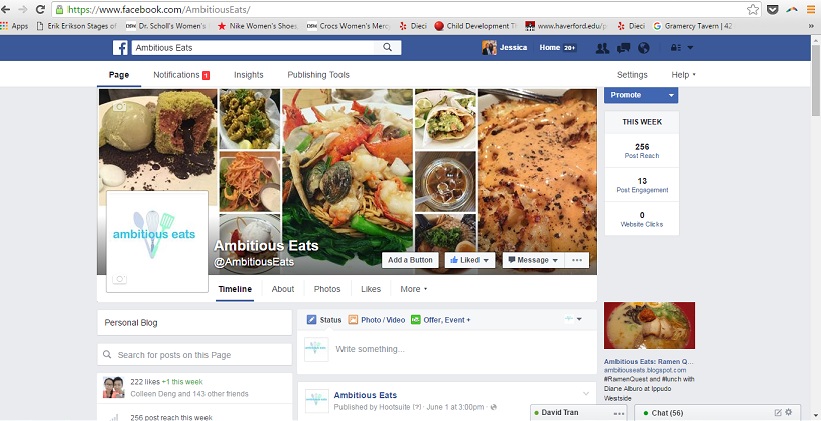
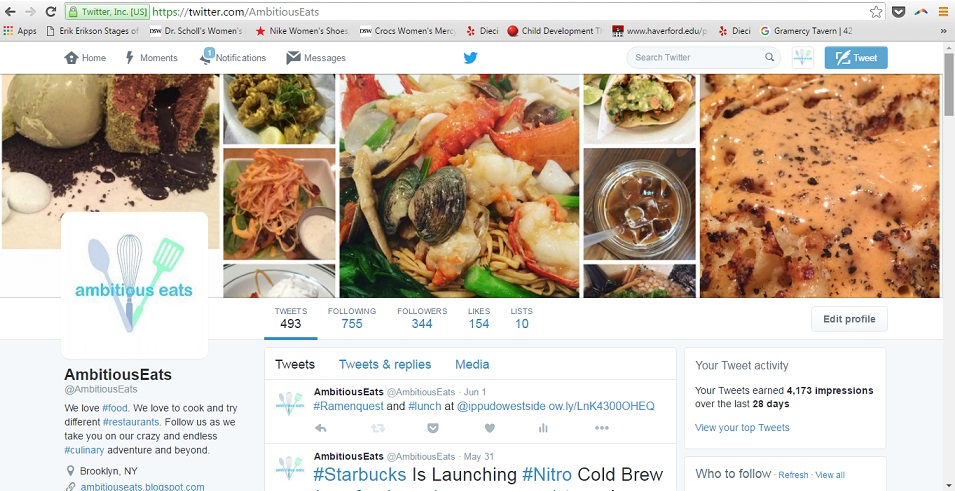
a Facebook page about food

a Facebook page about food

  • Start guest posting. If you’re looking for an effective way to promote your blog, one of the best things you can do is start guest posting. Guest posting, or writing a blog post that will be featured on a different blog, is one of the best ways to expand your audience and begin to develop authority in an industry like here at The Buzz.
  • Create the top 10 list. Create “The Top Ten list” of brands or blogs that you want to model yourself or blog after. Either because they are a competitor, you share a space with them, or they are in your niche. Make sure that they are successful at what they are doing and someone you want to emulate. Refer back to this list whenever you need inspiration, have to make a decision or want to see how others have done it.
  • Put a link in your e-mail signature.

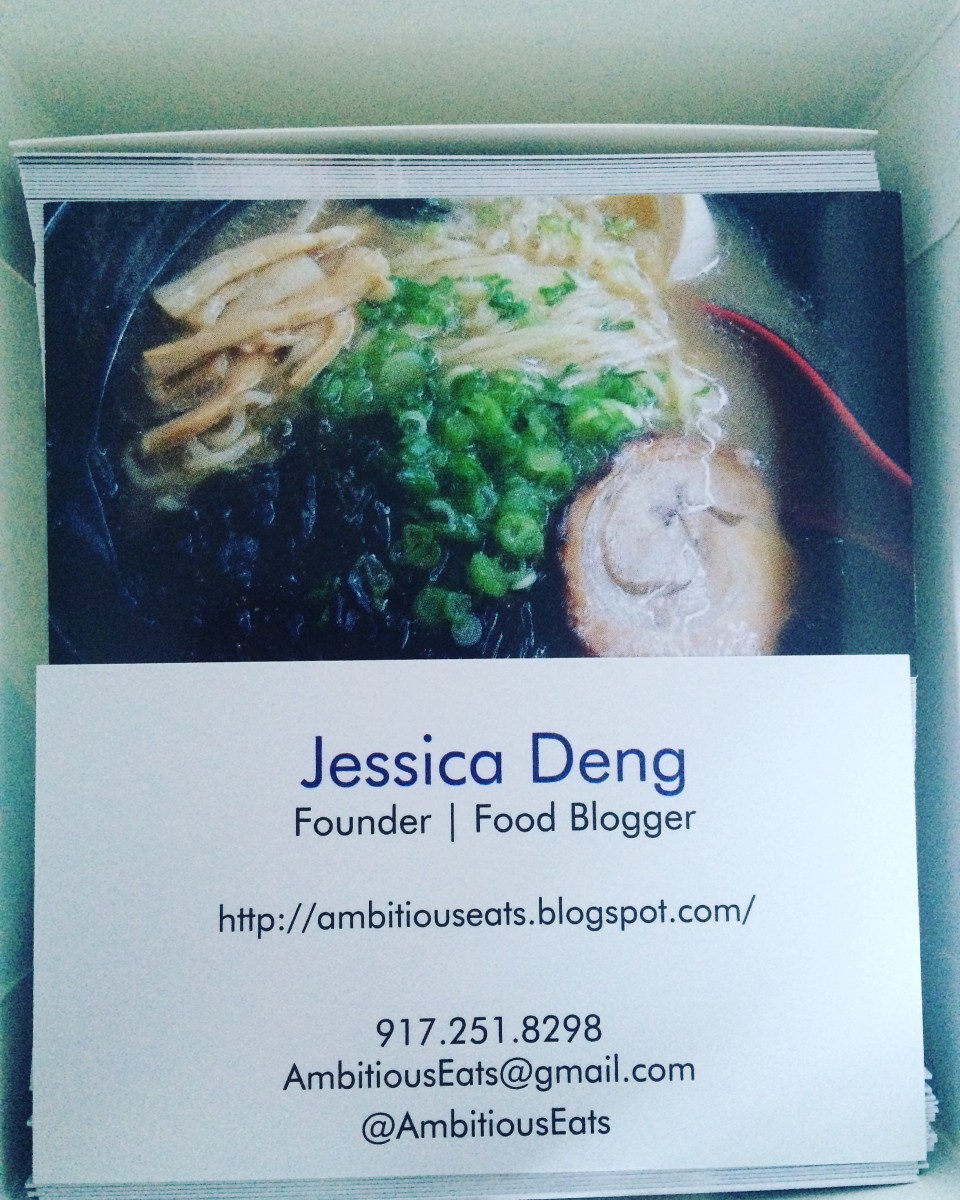
a business card of a food blogger "Jessica Deng"

  • Creating your own business card is a quick way to add to and strengthen your blog brand. Putting your logo and your colors on print materials will help when you travel, share, connect, and dream. Make sure that when you create your cards that you are comfortable with the information you put on them and keep them connected with you overall brand.
  • Use Pinterest. Believe it or not, I highly recommend using Pinterest because it has endless visuals that are surely going to spark some creativity or inspiration in you and there’s endless content on Pinterest for you to read, use, or emulate.
  • Attend networking events and/or conferences. There are many social media marketing events and blogging conferences available for you to attend where you can hear from influencers, meet other bloggers, and exchange business cards.

Hopefully you’ve found these tips helpful and took some notes. The next post will feature why I started blogging for The Buzz/Openlab.

Do you have any tips or tricks about how to promote a blog? 

Blogging Practices: Setting Up Your Content Menu

Hi everyone! Hope you’re off to a good start this summer. I am happy to announce that after negotiation with the brains behind Openlab and The Buzz, I along with other bloggers will be blogging this summer. Hope you will enjoy reading our posts and find them interesting!

I know you’re all used to reading my posts about food and I promise we will get to it soon, but for the next four posts I will be discussing best blogging practices for those that are looking to start a food blog.

cartoon of two computers communicating

Image Credit to: blog.plush-media.com

Setting Up Your Content Menu

From interviews and podcasts to slide shows and reviews, you’re not limited to the variety of posts to feature on your blog. Regardless of the angle of your blog, remember that an assortment of content will appeal to a broader audience.

As a blogger, your primary responsibility is to produce original content for your site or any site.  Posts can be about cooking, eating, food safety, food-related travel – really anything. Here are a few forms your posts could take:

  • Reviews:  Share your experiences and insights about restaurants, cookbooks, kitchen gadgets, and food brands to provide your audience with tried and tested suggestions for expanding their culinary repertoire.
  • How To’s: Audiences love this! Go back to basics by featuring simple technique posts tied to your area of expertise such as: how to pipe rosettes, how to order from a restaurant wine list, how to choose a wine store, and etc. This concept also applies to providing step-by-step photos to illustrate the process of preparing longer recipes.
  • Lists/VS.: Picking a topic and ranking things numerically is always an easy crowd-pleaser. It’s easy to read and gives people something to agree or disagree with. You could do a “Top Five” for almost any topic. A good list tends to kill on comments, so we’ll often save them for our last post of the day, which is the prime slot.
  • Newsy Stuff: Any time you come across an interesting food-related article in the paper that might have broad appeal, consider linking to it for a quick post. Particularly if it’s something controversial, it’s a good way to get people talking.
  • Series: Create a themed series for you blog by dedicating an entire day, week, or month to specific ingredient or topic. For example, dedicate the first week of December to foods that make great holiday gifts, post only about ice cream for the month of July, and etc.
  • Interviews: Post a simple and straightforward interview with a notable food name or fellow blogger that’s both informative and entertaining. Address trendy topics such as their top five favorite restaurants or what foods are always in their fridge. Promoting your culinary comrades enhances the online community centered around your blog, is a great way to meet new people and introduces your audience to new faces.
  • RecipesThese are the bread and butter of your food blog. Recipes can range from four-course meals to children’s snacks, but they are always better when accompanied by a short anecdote about discovering them, creating them, whatever. 

If you’re looking to start a food blog or any blog at all, I hope you found some of these content ideas helpful. Next up, I will be discussing about branding and promoting your blog.

What are some content ideas you can share with me or other bloggers?