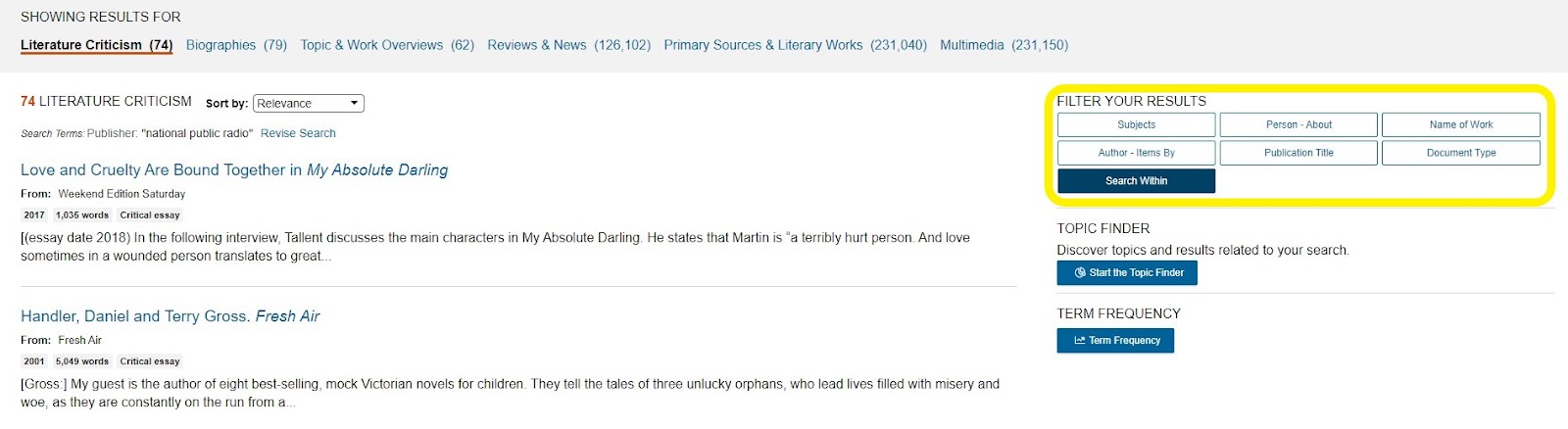
If you’re a fan of using ebooks from City Tech Library (or even if you’re not—now’s the time to get started!), you may notice some changes in how you’re able to read and download our ebooks.
Many of the ebooks we purchase are made available through two major software platforms: Ebook Central or EBSCO Ebooks. Readers can search for and read ebooks within the websites of these two platforms, or make use of available download options.
What’s changed?
In the past, it was possible to download ebooks for reading in the Adobe Reader app. However library ebooks will no longer be available for download to this application because it doesn’t meet new accessibility requirements for online materials.
New applications for ebook downloads
Starting May 19, 2026, EBSCO Ebooks will be available for download only to the free Thorium Reader app. Thorium reader is available for a variety of operating systems and can be used to read (or listen to) a wide range of materials beyond EBSCO Ebooks. Learn more about Thorium Reader here.
Starting June 1, 2026, all City Tech Library ebooks from Ebook Central will be available for download only to the Ebook Central Reader App. Explore this app’s features through a short video walkthrough.
These changes do not impact your ability to read library ebooks in the existing browser-based readers. If that’s how you usually access ebooks, you may not notice this change.
Questions? Feel free to Ask a Librarian if you need help navigating these changes.
This spring, Communication Design students in Robin Michals’ classes have worked with Richard Knipel, CUNY’s Wikimedian in Residence, to contribute photographs to Wikimedia Commons.
As an ever-growing collection of freely usable media files—images, audio, video, and more—that anyone can contribute to, Wikimedia Commons is an incredible resource of visual material. These images form the repository that Wikipedia and Wikidata draw from, but they are also used more broadly on the internet. Students had the opportunity, using an online tool that highlights which Wikidata items lack visuals, to identify needed images and then take those photographs themselves.
All student work has been collected on Wikimedia Commons using a category tag for Spring 2026 Contributions from Communication Design students, CUNY City Tech.
Wikimedia Commons page showing Spring 2026 Contributions from Communication Design students, CUNY City Tech
In City Tech Library, we’ve been working to add these images to relevant Wikipedia articles. To point towards a few examples, if you’re browsing the Wikipedia article for Long Island City, Richmond Hill, Queens, or Queens Center Mall, you might notice a photograph by a City Tech student.
Student Sami Pijuan contributed two images of P.S. 205 in Bayside, Queens, and noted, “I think it’s really cool to have something I took online and published for others to see!”
We think it’s pretty cool too.
Unicorncatmeow, CC BY-SA 4.0 <https://creativecommons.org/licenses/by-sa/4.0>, via Wikimedia Commons
Wikimedia Commons is a collection of freely usable media files—images, audio, video, and more—that anyone can contribute to. Perhaps best known as the repository of images that can be used in Wikipedia articles, material from the Commons is available for use more broadly on the web and beyond.
I find myself browsing Wikimedia Commons for various reasons: sometimes I’ve landed there because I was curious about an image I saw in a Wikipedia article, and I end up browsing similar images on the Commons. Other times I’m making a presentation and need an image to illustrate a point.
My motivations for contributing to the Commons stem from this. Sometimes I’m just curious about a place or event and want to share photos so that others can discover it; other times I upload images that I think would be useful for illustrating important concepts. I also see media contributions to the Commons as a way to improve representation online. Others have expressed other reasons to contribute: they may want to preserve history or contribute to shared knowledge.
Does contributing to the Commons really make a difference?
The best way to learn if contributions to Wikimedia Commons have been useful to others might be through conversations with people who have found media files that they needed and whose work was improved by access to this material, or through individuals who contribute to the Commons and have seen their photos circulate in the world. The Queens Daily Eagle noted in 2019 that a photo of the Brooklyn Museum by prolific NYC contributor Jim Henderson had at that point been included by journalists in hundreds of news articles. Henderson’s ongoing work is a reminder of the impact Wikimedia Commons contributions make on local news.
We aren’t always lucky enough to hear from individuals who use our Commons contributions, though. In the absence of testimonies about impact, we can explore a few measurements of use that might translate to how our uploads have made a difference.
Check file usage on other wikis
The first way to see if a file has been used is by taking a look at the list of File Usage on Other Wikis provided on the Commons page for each media file. Take a look, for example, of how my photo of an NYC Compost Bin is currently being used:
Second, GLAMorgan is a handy tool for counting the views of the Wikipedia pages that images in a specific Commons category have been posted on. This is especially useful if an institution or project has uploaded content that is all tagged with the same category. One example at City Tech is the category Fall 2025 Contributions from Communication Design students, CUNY City Tech, which contains student photography. If we plug that category into GLAMorgan we can see that, in the month of March 2026, any wikipedia pages (in various language versions of the encyclopedia) containing the 22 images that students contributed for this project had 15,393 views.
Finally, to understand how people have interacted with my own Commons uploads on wiki projects, I can also explore usage of the wiki pages they’ve been added to directly through Wikipedia’s statistics tools. Let’s look at my compost bin as an example. This photo is embedded in the New York City waste management system article. I can verify on the article’s edit history that the image was added on November 13, 2025. I can then head over to the pageviews tool to see that, between the date it was added and today’s date, this article has had 6,386 pageviews. Did everyone go to that article to see my photo? Absolutely not. But, readers who scrolled down to the section on composting now have an illustration of one type of household compost bin that the city has distributed.
Discover how Commons contributions are used across the web
Some projects have relied on the Google Reverse Image Lookup tool to see how Commons images are used beyond wiki projects, or on web analytics to measure traffic to digital collections they’ve uploaded.
When I am curious about the re-use of my own contributions on the broader web, I use tools such as Google News, Google Image search tool or Google Scholar to search for my wikipedia username, which should be included in captions for use of some of my Commons contributions because of the attribution license I selected. This helps me find news articles, scholarly publications, and other sites that have made use of my images.
City Tech Library’s archives is home to the Vogel Ophthalmology Collection, a gift of rare ophthalmic textbooks from the estate of the late Irwin Vogel. Mr. Vogel was an adjunct lecturer at NYCCT before becoming the program director at Cañada College in California and is credited with an optical formula still in use in opticianry.
This collection of approximately 300 volumes has been placed in custodianship in City Tech’s Ursula C. Schwerin Library and is located in the archives. Access to the collection is available by appointment through the Archives Use online request form. The collection is now available for browsing through the library’s online catalog at https://cityte.ch/vogel.
As noted by Steven Indelicato, Director of Ophthalmic Dispensing & Vision Care Technology at City Tech:
The Vogel Collection is an important and rare resource because it preserves the history and development of ophthalmology, optometry, and vision science through original works spanning more than a century. The collection includes early texts on refraction, lenses, visual physiology, ocular disease, and optical practice, offering a valuable record of how both scientific knowledge and professional training evolved over time. Beyond its research value, the collection gives students, faculty, and historians direct access to primary sources that connect today’s practice to the foundations of the profession.
Wikimedia NYC and the Wikimedia Foundation brought Wikipedia Day NYC 2026 to City Tech last month, and the Library was thrilled to participate!
Wikipedia Day is an annual celebration of this people-powered encyclopedia’s birthday and we were marking 25 years this time. It was a fantastic celebration; hundreds of wikimedians and wiki-curious folks attended.
Collections Management and Archives Librarian, Associate Professor Wanett Clyde, introduced the keynote speaker N.K. Jemison and had an opportunity to highlight City Tech’s own sci fi archives.
Technical Services and Electronic Resources Librarian Assistant Professor Jen Hoyer moderated a panel on information liberation and led a Wiki101 workshop.
Information Liberation panel. Left to right: Jen Hoyer (moderator), Patrick McGee, Wilhelmine Coste, David Hecht, Ann Matsuuchi, Iris Finkel. Photo: SkaterbyAssociation, CC0, via Wikimedia Commons
Wiki101 workshop led by Jen Hoyer for Wikipedia Day. Photo: SkaterbyAssociation, CC0, via Wikimedia Commons
Questions from the audience at Wiki101 workshop. Photo: Nye’Lyn Tho, CC BY 4.0 , via Wikimedia Commons
Image: Adapted from “Stephanie Fuller and Abby Butcher at Ditchling Feminist Wiki Editathon Oct 2019,” Molly Fuller Abbott, CC BY-SA 4.0 <https://creativecommons.org/licenses/by-sa/4.0>, via Wikimedia Commons.
Join us at City Tech to explore Wikipedia, Wikimedia Commons and more during the Spring 2026 semester.
Coming up on March 13th: a 30-minute online Introduction to Wikimedia Commons. We’ll explore how images from Wikimedia Commons can be used for teaching or in student assignments, as well as how individuals can contribute to Wikimedia Commons. Read more and register at this link.
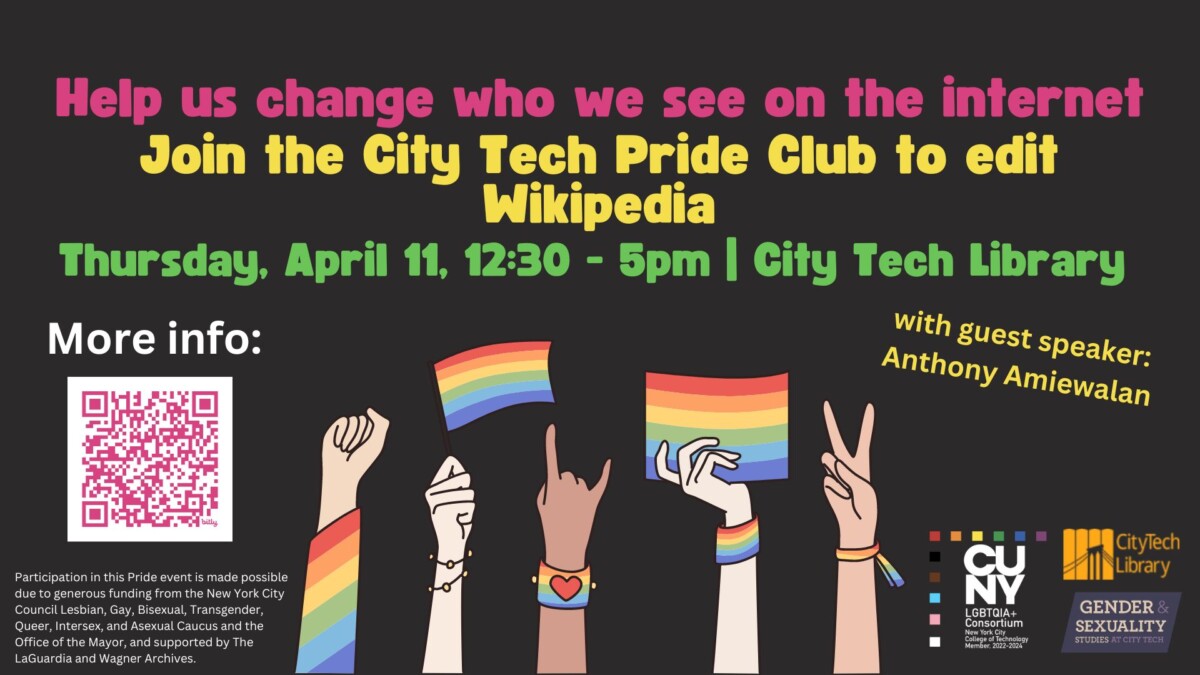
Join City Tech Library and the Pride Club for an LGBTQIA+ Wikipedia Editathon on March 26th from 12:45-2:15pm. After a short training session we’ll work on Wikipedia articles about LGBTQIA+ topics related to CUNY, New York City, and beyond. Food will be served! Read more and register at this link.
Do you love CUNY history? Join us on April 16th at City Tech Library for Archives+CUNY+Wikipedia. We’ll use CUNY’s rich archival resources for editing Wikipedia. Learn more and register to attend at this link.
Wikipedia Day is an annual celebration of Wikipedia’s birthday, and in 2026 this online encyclopedia turns 25. City Tech Library is thrilled to be working with Wikimedia NYC to host this celebration at City Tech. Weather forced us to reschedule, and we’re now looking forward to this event on March 28, 2026.
Together we will explore the past, present, and future of the free knowledge movement, and celebrate all the people, communities and ideas that make Wikipedia possible. The day will include keynote speakers, family friendly activities, lightning talks, great food, and much more.
This fall, students in Professor Robin Michals’ Photography I class have been contributing images to Wikimedia Commons with support from CUNY’s Wikimedia in Residence, Richard Knipel. We are so excited to see their work online!
All their photo uploads can be explored on the Contributions from Communication Design students, CUNY City Tech category page. In addition to being available on the Commons under Creative Commons licenses, it’s exciting to see these already being incorporated into wikidata items and wikipedia articles in various languages.
A screenshot of the Wikimedia Commons page for “Contributions from Communication Design students, CUNY City Tech”
I visited one of their classes to chat with them about the impact of their contributions to Wikimedia Commons and to hear their thoughts on the images they added. Check out some student reflections on their images below:
Kylan04, CC BY-SA 4.0 , via Wikimedia Commons
Of Fort Greene Park inAutumn, Kylan Whittaker explained, “My mom used to take me there a lot when I was a kid, so I made a lot of good memories in that park.”
Photonatomist 00, CC BY-SA 4.0 <https://creativecommons.org/licenses/by-sa/4.0>, via Wikimedia Commons
Wikipedia user Photonatomist explained that Crotona Park Pond is “vast” and feels like “a calm place to be.”
Gsnur3, CC BY-SA 4.0 <https://creativecommons.org/licenses/by-sa/4.0>, via Wikimedia Commons
Nurcan Akca says of I.S.125 Thomas J. McCann Intermediate School: It was my middle school!
JAMMIN8905!, CC BY-SA 4.0 <https://creativecommons.org/licenses/by-sa/4.0>, via Wikimedia Commons
Rodrigue says of Canarsie Skate Park: “That place is special because it’s close to home and it’s a large place where friends and family can come together to have fun. “
When I asked students what it means to them that their work is now on Wikimedia Commons, they had a few more thoughts to share:
To me it feels nice that I can share a part of my life to others and basically create an invitation to others to have similar experiences as me.
It makes me proud knowing that my work is being used in Wikipedia commons. It scales out my work and makes me really grasp how impactful my photography can be.
Workshop description: What is the role of bibliometric analysis in our research, and how can data visualization with VOSviewer play a key role in analyzing bibliometric data?
This workshop will provide a brief introduction to the benefits of data visualization for bibliometric analysis before diving into one tool that supports this work. City Tech Librarian Jen Hoyer will guide attendees through use of VOSviewer, an open source data visualization tool, to demonstrate how bibliometric analysis can help examine questions including: what are the main topics or research areas in a field? How do these relate to each other? How has a specific field developed over time?
After an introduction to bibliometric analysis and data visualization, we’ll dive into VOSviewer and its core features. Attendees will have an opportunity to watch demonstrations of the tool in use and to walk through the steps of creating visualizations themselves with a sample dataset (provided).
Attendees should download and install the free VOSviewer software in advance of the workshop if they wish to follow along on their own computer; this is encouraged but not mandatory. Versions for various operating systems can be downloaded athttps://www.vosviewer.com/download.
Our Archives Week Open House this year (read more about over here!) included a display of book stamps that help tell the history of City Tech Library. While you can read more about our library’s history on our website, we’re sharing some of our display here in digital form.
Photo by Wanett Clyde
This project grew out of our interest in collecting the various book stamps used by our library and by the institutions and libraries that have merged into what is now NYC College of Technology (known colloquially as City Tech). While we weren’t able to locate stamps for some of the earliest versions of City Tech Library, we found more than we expected: many library addresses we didn’t know even about and library branches we hadn’t heard of.
Tracing the history of our library has helped us think about the various ways libraries have served students over time, and we get a glimpse of past iterations of library services through the illustrations also on display in this room. These illustrations are from City Tech Library’s archive; we are excited to keep exploring and learn more about what they were initially used for.
As part of the trade schools movement, the New York Trade School (founded as The Technical Schools of the Metropolitan Museum of Art and later known as Voorhees Technical Institute) was part of a larger movement by union leaders and philanthropists to educate workers and provide educational opportunities to immigrants. Voorhees Technical Institute was located on West 41st Street in Manhattan, in a building that still exists near the Port Authority Bus Terminal. While our library no longer has books from its earliest iterations as the New York Trade School, several books from various branches of the Voorhees Technical Institute were incorporated into our collections.
Book stamp for Vortech Library, Voorhees Technical Institute
The New York State Institute of Applied Arts and Sciences was founded in 1946 under legislation that set aside funds to support returning GIs following World War II; classes were initially held in the old Public School 15 building in downtown Brooklyn. In the 1950s, classes were also held at the Hotel St. George at 111 Hicks St, Brooklyn. The library was, for at least some of this time, located in a building at 300 Pearl Street in downtown Brooklyn.
Library stamp for New York City Community College of Applied Arts & Sciences
New York City Community College, also known as the Community College of Applied Arts and Sciences, grew from the small set of technical programs offered when it was founded as The New York State Institute of Applied Arts and Sciences to boast more than 10,000 graduates by 1963. And while it was part of the State University of New York system in the early 1960s, known for a time as SUNY Tech, it became part of the CUNY system mid-decade. The library had several locations during the lifespan of New York City Community College: in its previous location at 300 Pearl Street; at 12 Franklin Street; on Livingston Street; and at the current address, 300 Jay Street.
Library Stamp for New York City Community College Library, showing an address change from 12 Franklin Ave to 300 Pearl Street.
Book stamp for the Voorhees Branch of NYC Community College
Book stamp for NYC Community College
Following New York City’s funding crisis of the 1970s and cuts broadly to community colleges across the city, the school’s name was changed to New York City Technical College in 1980 and its charter was amended to designate it an “urban technical institute,” with permission to grant 4-year degrees as well as associates degrees.
A book stamp for New York City Technical College Library
The name of City Tech was formally changed to New York City College of Technology in July 2002, to emphasize its high-tech workforce development focus and to distinguish it from other technical schools.
Stamp marking a book as the property of the library at NYC College of Technology
This project was compiled by Prof. Jen Hoyer and Prof. Kel Karpinski