Kings County Distillery

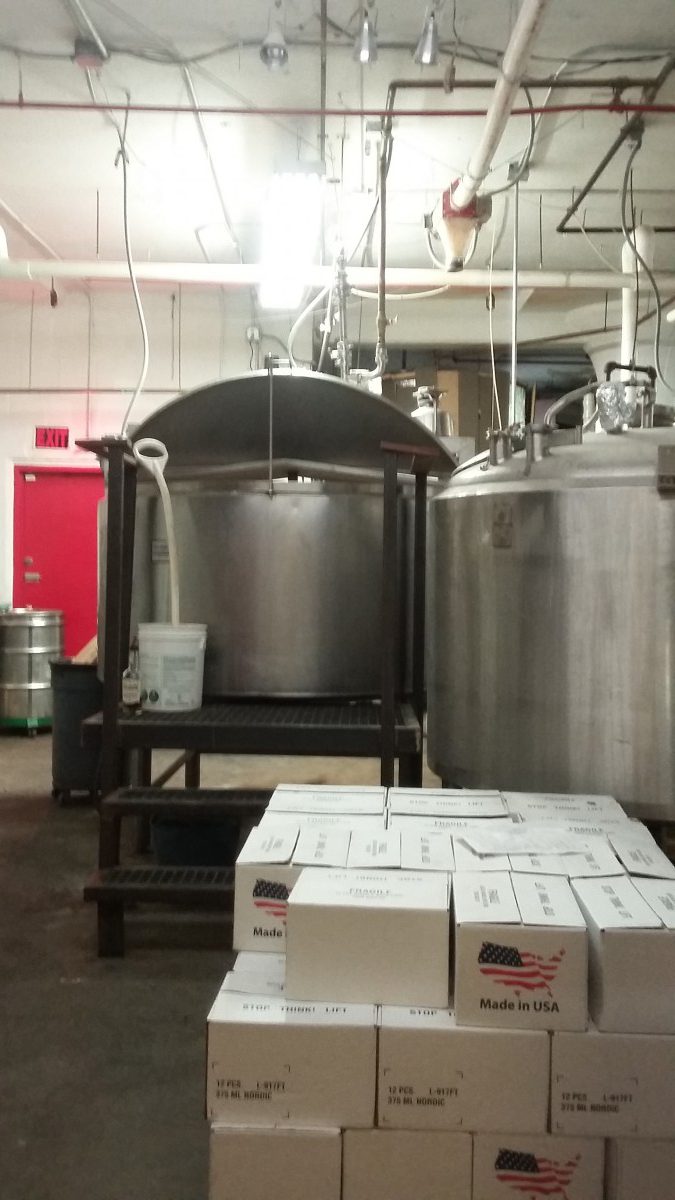
Kings County distillery is New York City’s oldest operating distillery, first since the prohibition. In 2012, the distillery has moved to the Paymaster building in Brooklyn Navy Yard.

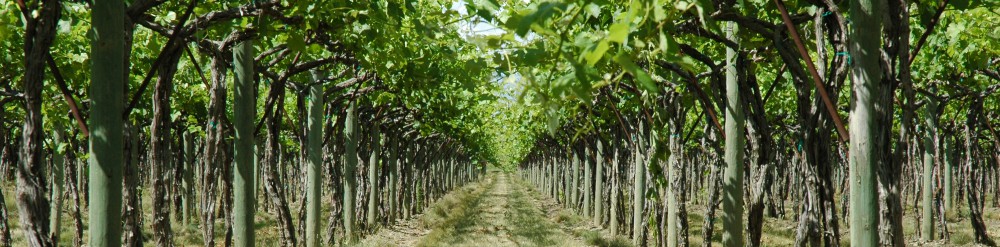
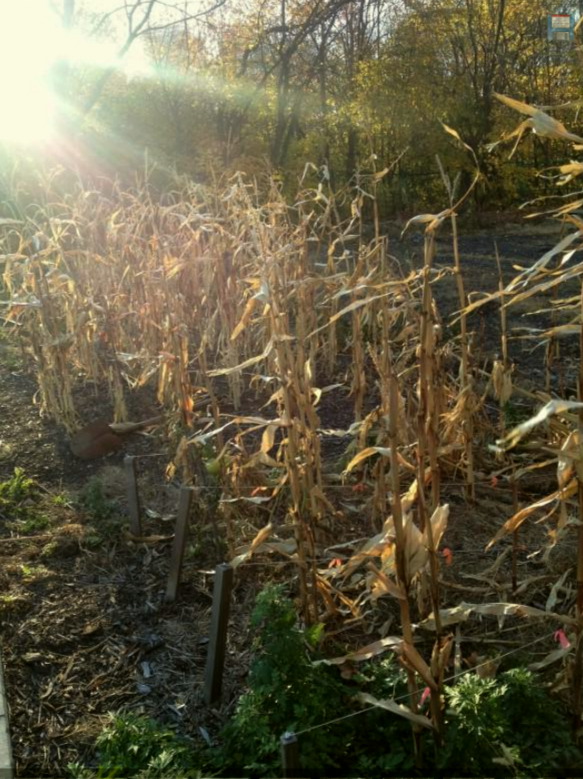
They use locally-sources grains, water and barrels for their production. They support local agriculture practices and they even have a small corn field outside of the distillery.

The distillery believes in a locally-sourced agricultural system and some of their corns come from a small corn field outside of the distillery.

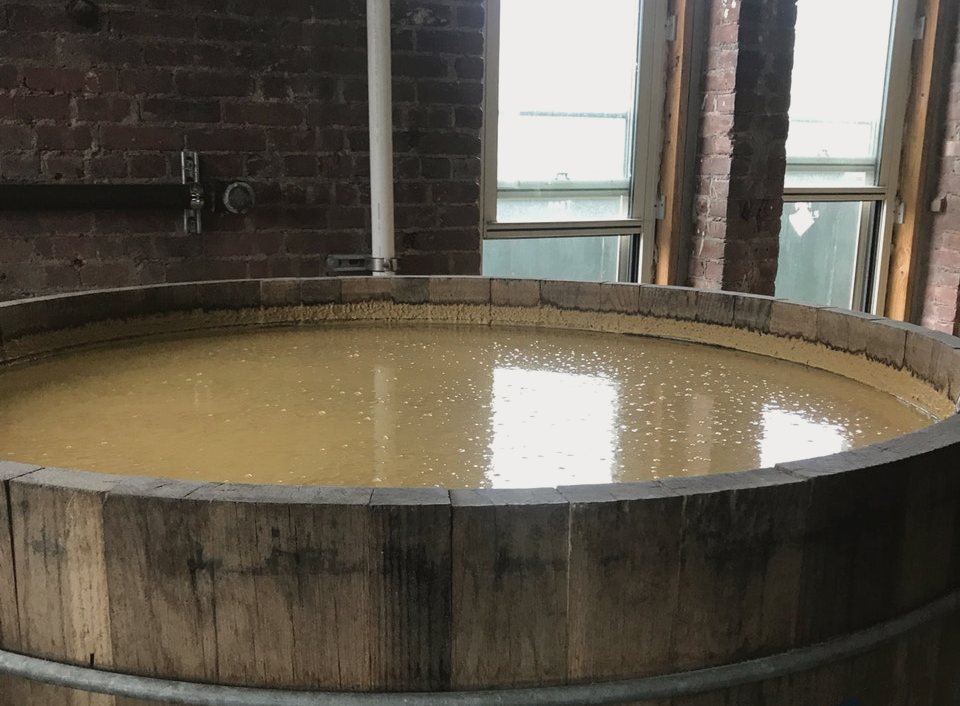
After preparing the ingredients such as water, yeast and grains, fermentation starts in wood barrels. The goal of the fermentation is to release as many congeners as possible.

The yeast feeds on sugar sources to create alcohol, carbon dioxide and heat. Fermentation process can take days and even weeks depending on the goal.

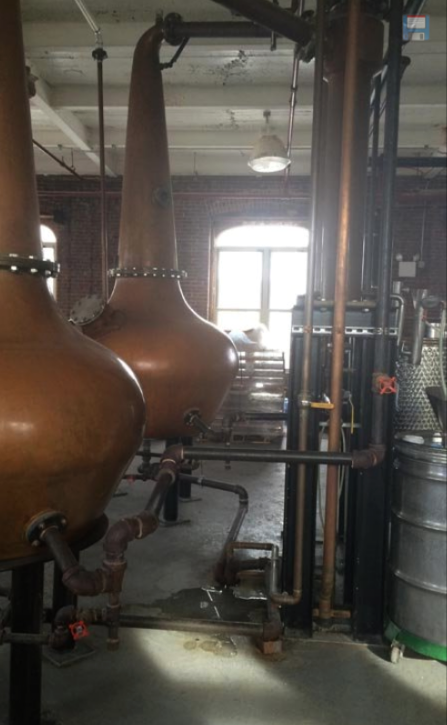
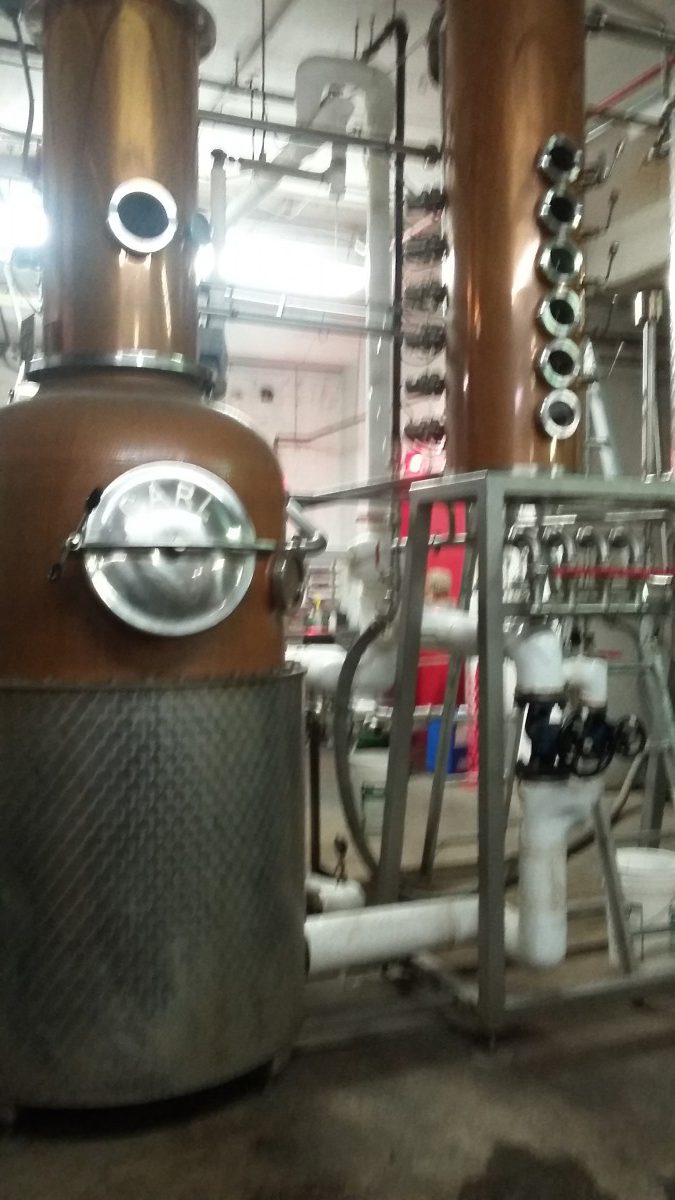
After fermentation, distillation process occurs. Distillation of whisky, scotch and bourbon is done mainly on the copper pot stillsContinuous still systems are used for making neutral spirits such as gin and vodka which use both systems.

Still is a container in which the alcohol is separated from the water by heating the liquid to 176 to 212 degrees Fahrenheit. 176 degrees Fahrenheit is the boiling point of alcohol and 212 degrees Fahrenheit is the boiling point of water. After reaching the boiling point of alcohol, it goes into gas form and then condensed back into its liquid form and put in a wooden barrel to start the aging process.

Pot still systems are often very large in size. This allows for greater congener retention compared to continuous stills. The size and shape of the pot influences the overall quality of the end product.


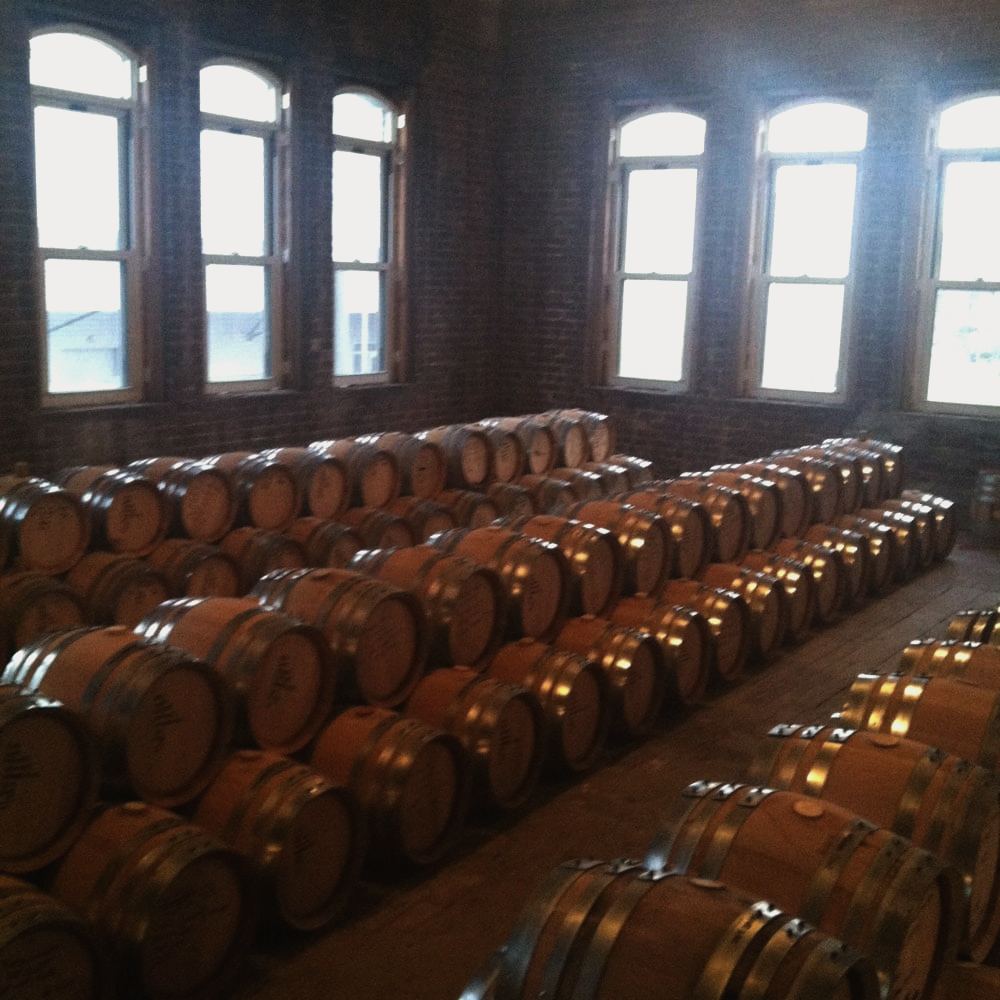
After the distillation process, stills are stored in oak barrels in a designated room. The room has a heavy whisky/bourbon smell with a hint of wood.

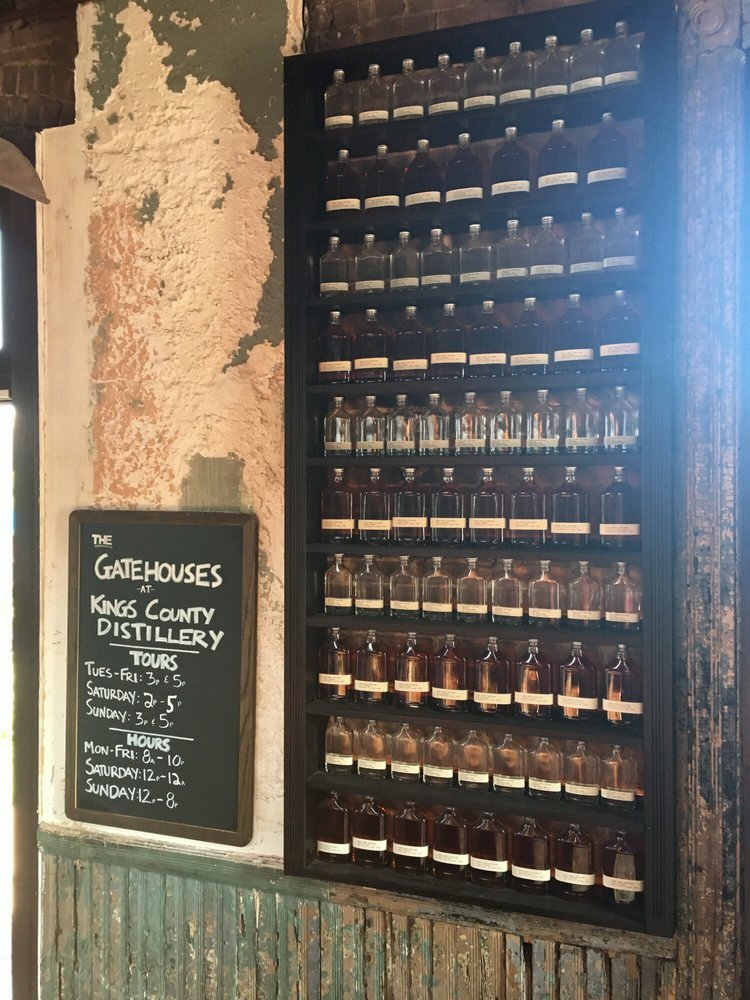
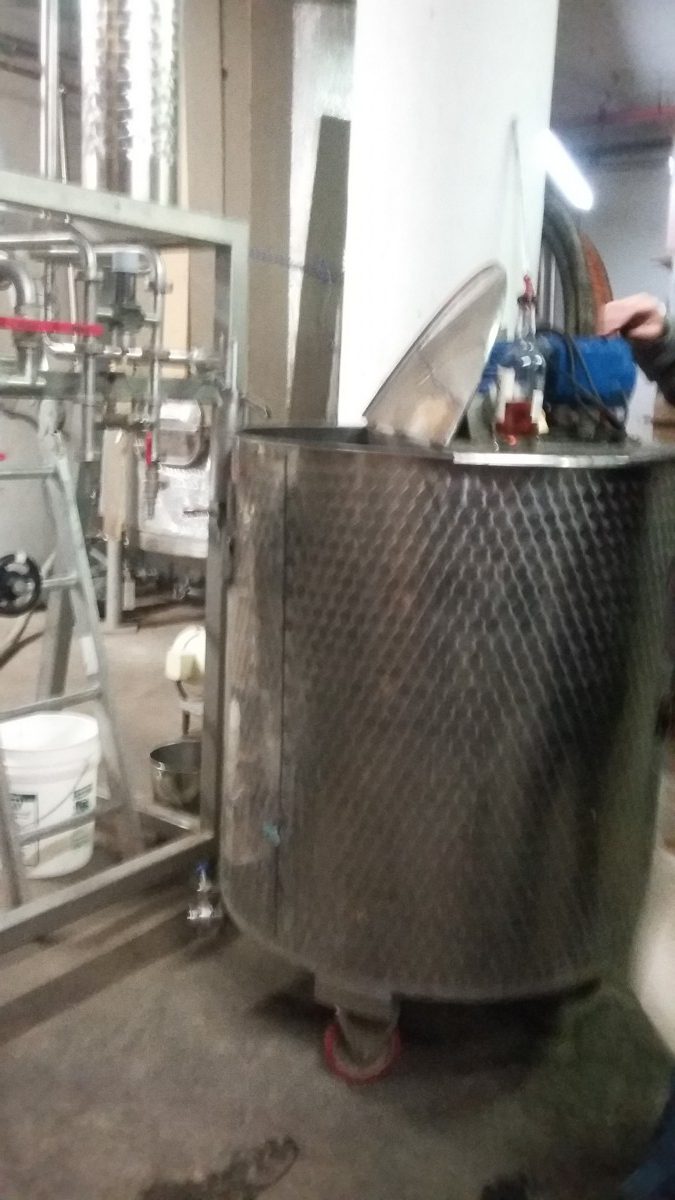
Some of the finished products that are on display.

Overall, it was a great learning experience. Most of the information provided by the staff was just a repeat of what we have learned in our class. The information I didn’t know prior to my visit was mostly about the history of this particular distillery.

It’s a great starting point for people who are looking to get educated about how their operation works gain new perspectives.

Brooklyn Brewery

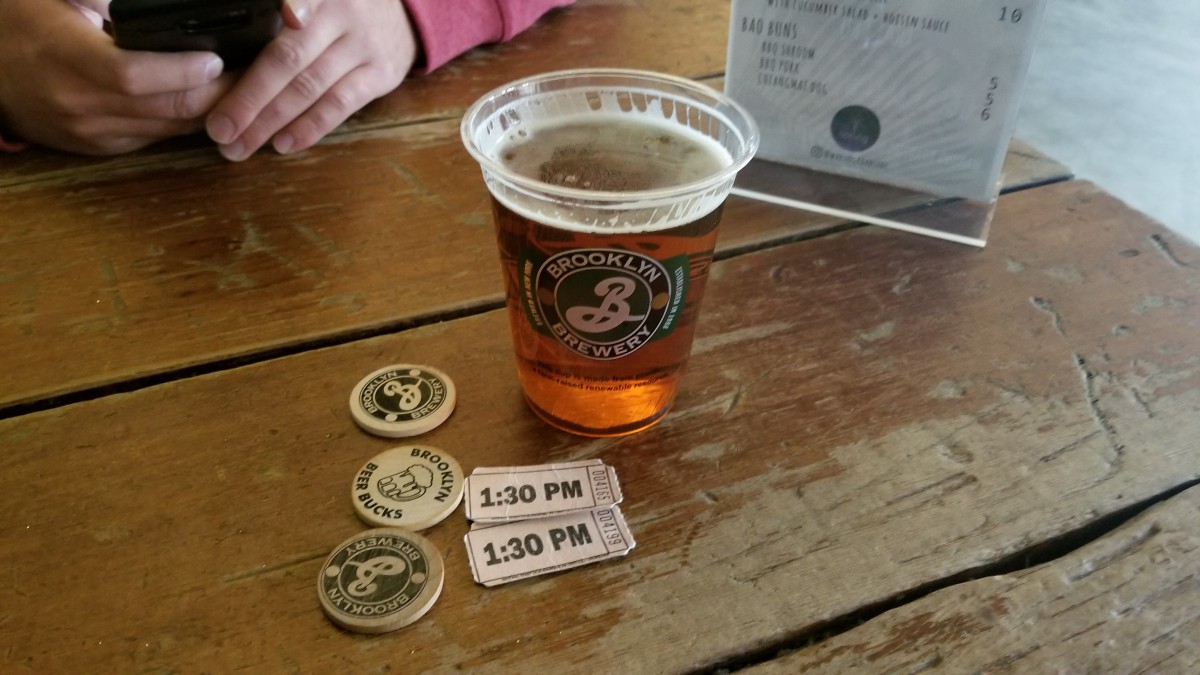
A few weeks ago I visited the Brooklyn Brewery. It was a Sunday afternoon and I was on the first tour of the day. Upon entering the brewery, the security guys gave my boyfriend and I free tour tickets and told us that we can go have a drink while we wait. We purchase these cute little Brooklyn Brewery tokens that we then exchanged for some beer.

The tokens, beer and tour tickets

The guys who were serving the beers in the tasting room were very knowledgeable due to the fact that they help making the beer on days that the tours are not in session. They told me that they get their hops and barley mainly from Washington and Oregon, depending on where its best at season. They also asked my boyfriend and I what beers we typically drink so that they can recommend the best tasting beer for us which was very helpful. I tried the Brooklyn Lager and my boyfriend had the Winter Lager. Something that caught my eye was that their cups were made from plants (it said so on the cup) which made them environmentally friendly.

The label stating that the cup is made out of plants.

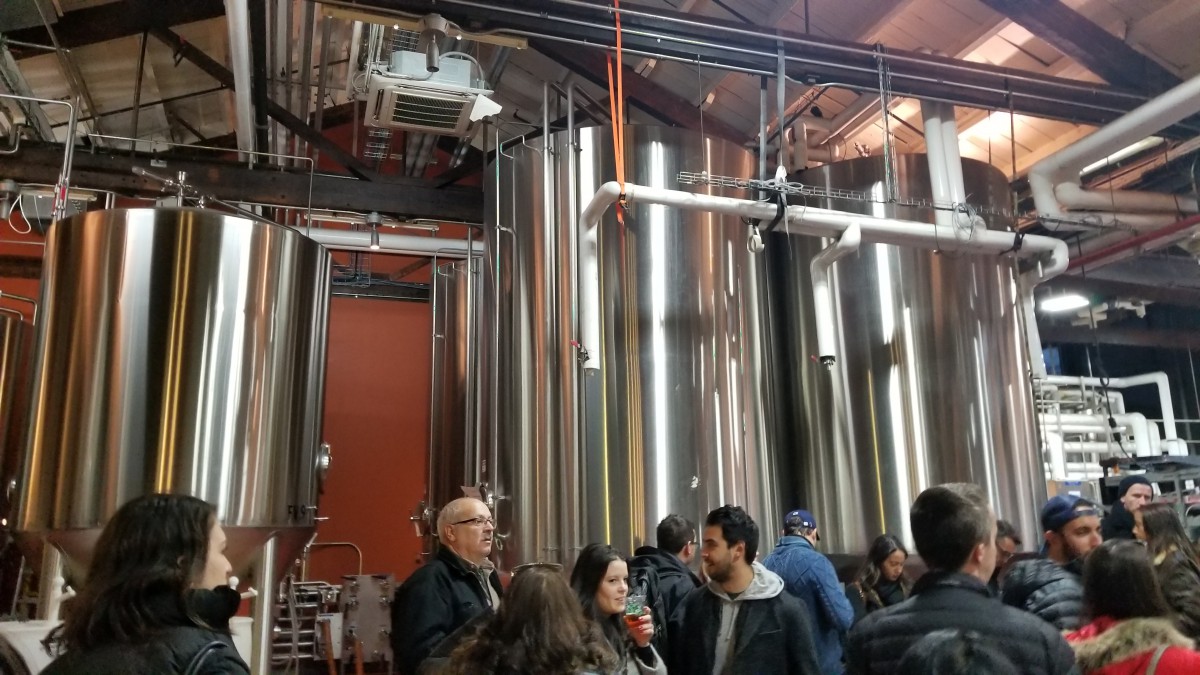
They also had a food cart inside that apparently they change out every week to allow people to try new types of foods while visiting the tasting room. When our tour started, we were allowed to take our beers with us to enjoy while the tour guide told us about their process of making beer. The tour guide started off by asking if anyone knew what the four main ingredients of beer were and I was given a free beer token for answering the question. The four main ingredients are malt/barley, water, yeast and hops. A fun fact that she mention was that hops are a 1st cousin of the marijuana plant. The barley is guided up and mixed in with hot water, it soaks together and creates what is called a mash. That mash is then sent to a lauter tun in which the mash separates into hot and sweet liquid and the grain. That hot sweet liquid is called the wort which is unfermented beer. The wort is then sent to the brew kettle, after the liquid boils, the hops are added for flavor, aroma and also for the beer to preserve better. When that process is over, the liquid is sent to the fermentation tanks and fermented in different ways depending on what type of beer they want to make; a lager or an ale.

The fermenting tanks

After the beer is made it is then either legged or bottled. However all their canned beer and Lager is made in upstate, Utica, NY because those are 60% of their sales and the brewery doesn’t have the space capacity or equipment in the brewery itself to make that much beer. The brewery in Brooklyn actually makes about 1/3 of their beer like their seasonal and special flavors and the factory in upstate makes the other 2/3.

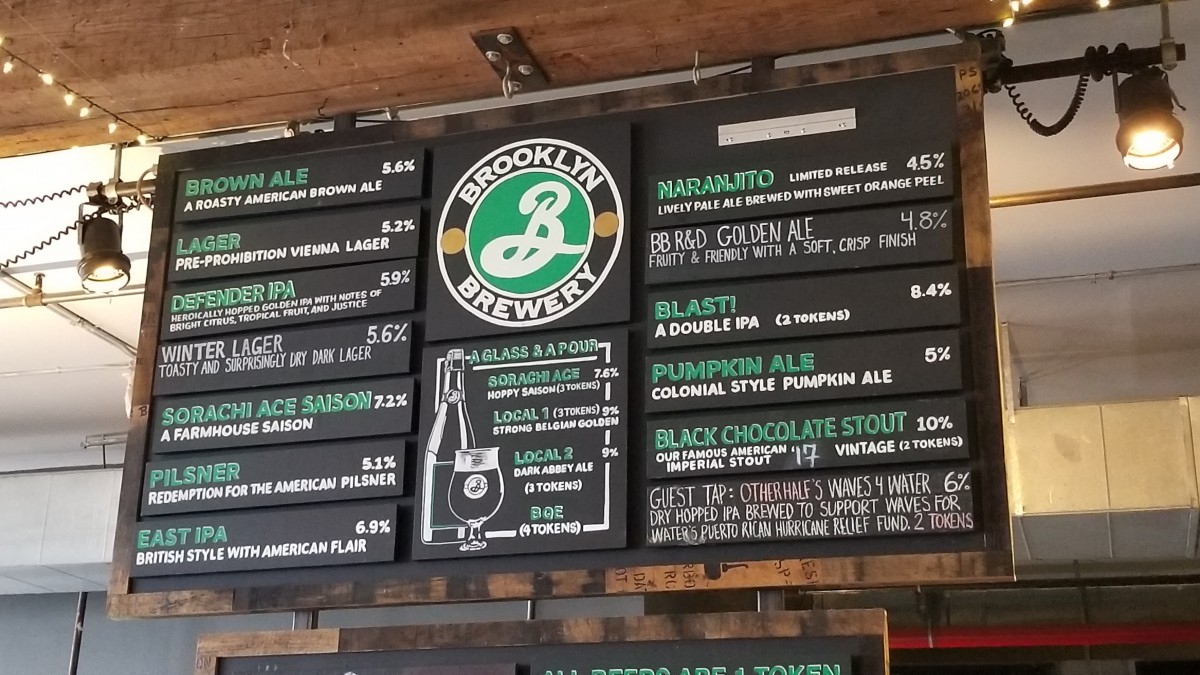
The beer menu in the tasting room

A fun fact is that when Brooklyn Brewery first started off it didn’t even have a name and it was just beer being made out of a house by Steve Hindy. Steve then partnered up with Tom Potter and they decided to make a brewing company. When they were coming up with a logo they wanted so many different things on it but didn’t have any money. They asked Milton Glaser, the creator of the I<3NY logo. It took them a while to even get an appointment with him, but after hassling his assistant for weeks she finally gave them and appointment to see him. He offered them a very simple design (the design that we know now) and asked for a percentage of the company in return and as well as free beer for the rest of his life. He still gets free beer to this day. That is how Brooklyn Brewery began as a company.

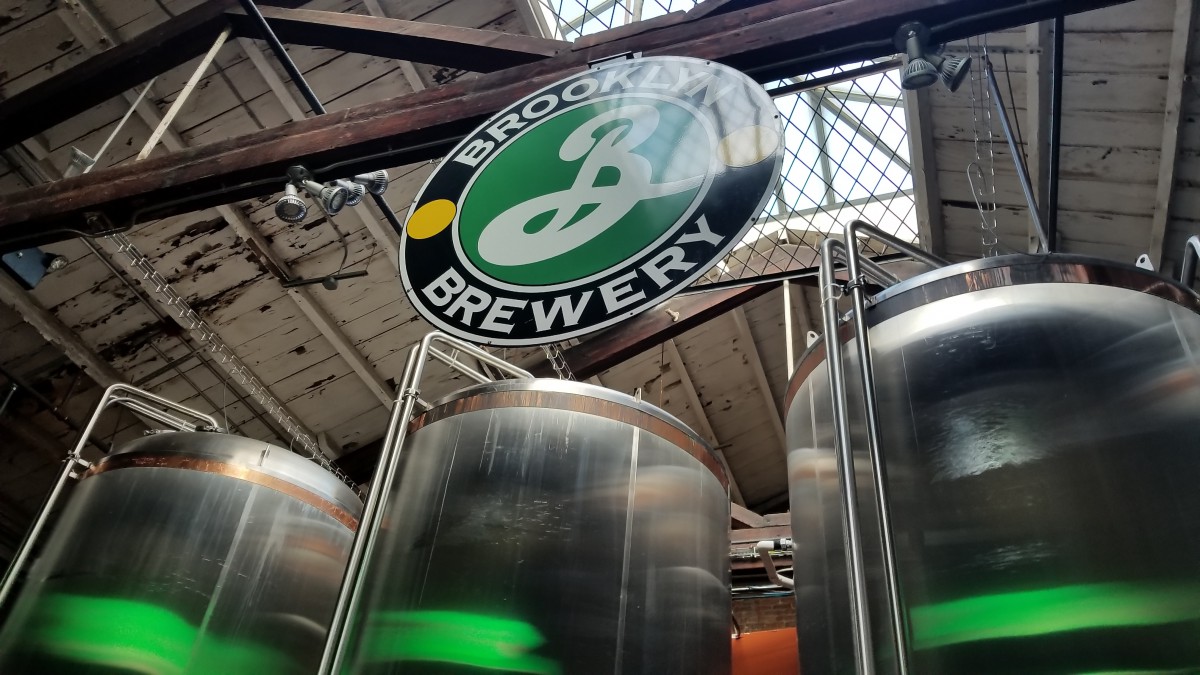
More tanks with the Brooklyn Brewery Logo

Harmony Vineyards

Throughout the semester we’ve been learning about wines in different regions and how they are made. Finally it was my opportunity to visit a vineyard/winery and actually see what we’ve been discussing in class. One thing that made my visit to Harmony Vineyards which is located at 169 Harbor Rd, St James, NY in Long Island, different was that I went during the evening. It wasn’t intentional but it was a unique way to explore the vineyard and tasting.

Harmony vineyards has been around for 326 years, and has a 4-acre vineyard, and a 32.5-acre waterfront. The grapes variety grown are red: merlot, cabernet sauvignon, and cabernet franc which are blended together to make a Bordeaux-style wine. The white grape variety is just chardonnay to make a Chablis-style wine. Since the vines are in such close proximity to the water they experienced diurnal temperatures which helps moderate the temperature. When we visited harvest had already passed so their was no grapes on the vine and since it was so dark we could see the water and was a bit scared to go too deep into the the vineyard. I was told the Harmony vines doesn’t give tours so my evaluation of the vineyards were concluded from my own knowledge because “I study wine”.

After exploring the vineyards we went indoors to the tasting room to try the wines and ask questions. When asked if I could see their production facility I was told that they don’t make their wines on site, and they send them to LENZ winery, who makes their wines. This really surprised me but at the same time it made sense because the property isn’t really that big. The next day I called LENZ winery which is located upstate NY to get information about the vinification(how the wine is made) practices for Harmony vineyards. I was able to speak with Thomas who’s the assistant winemaker, and he provided me with this information.  

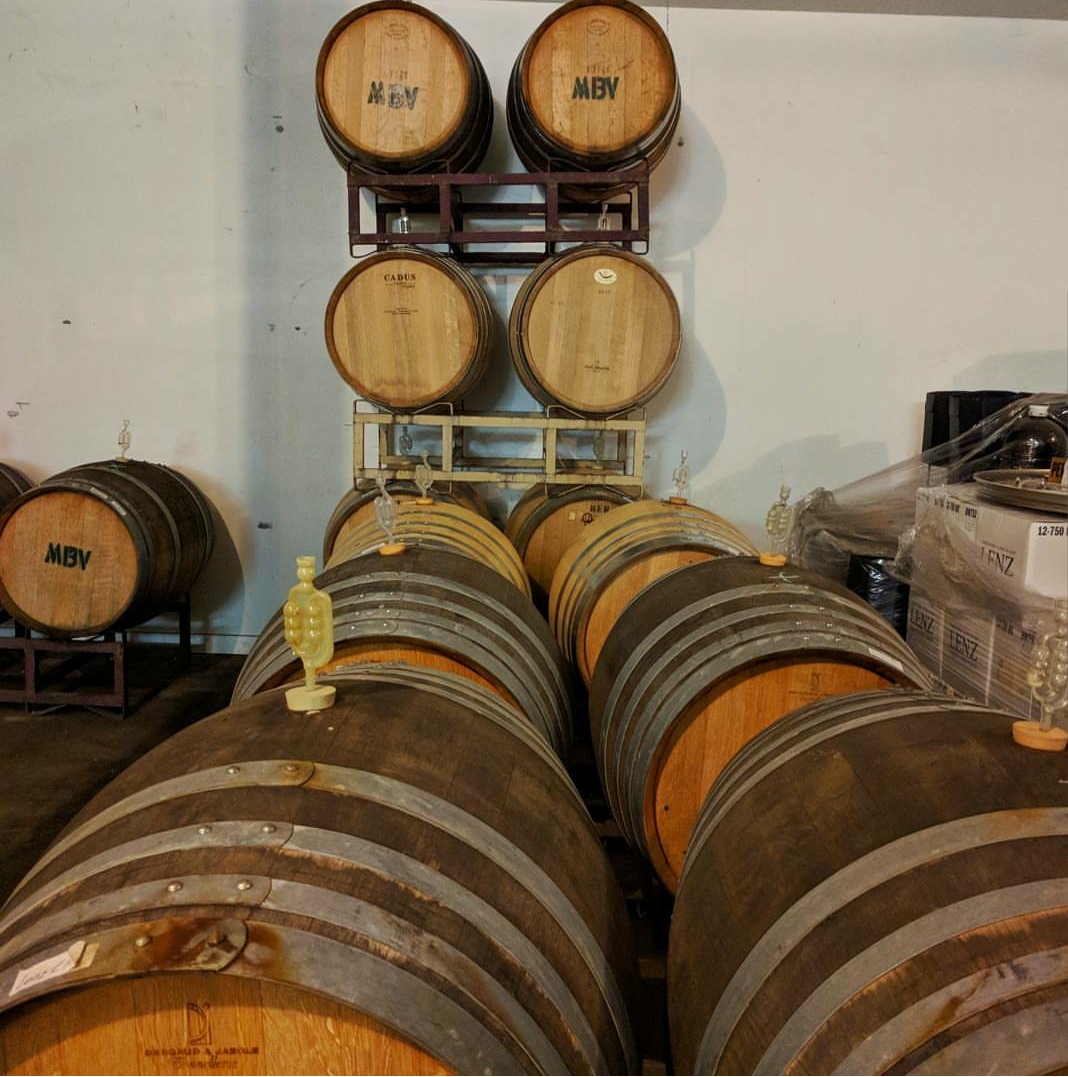
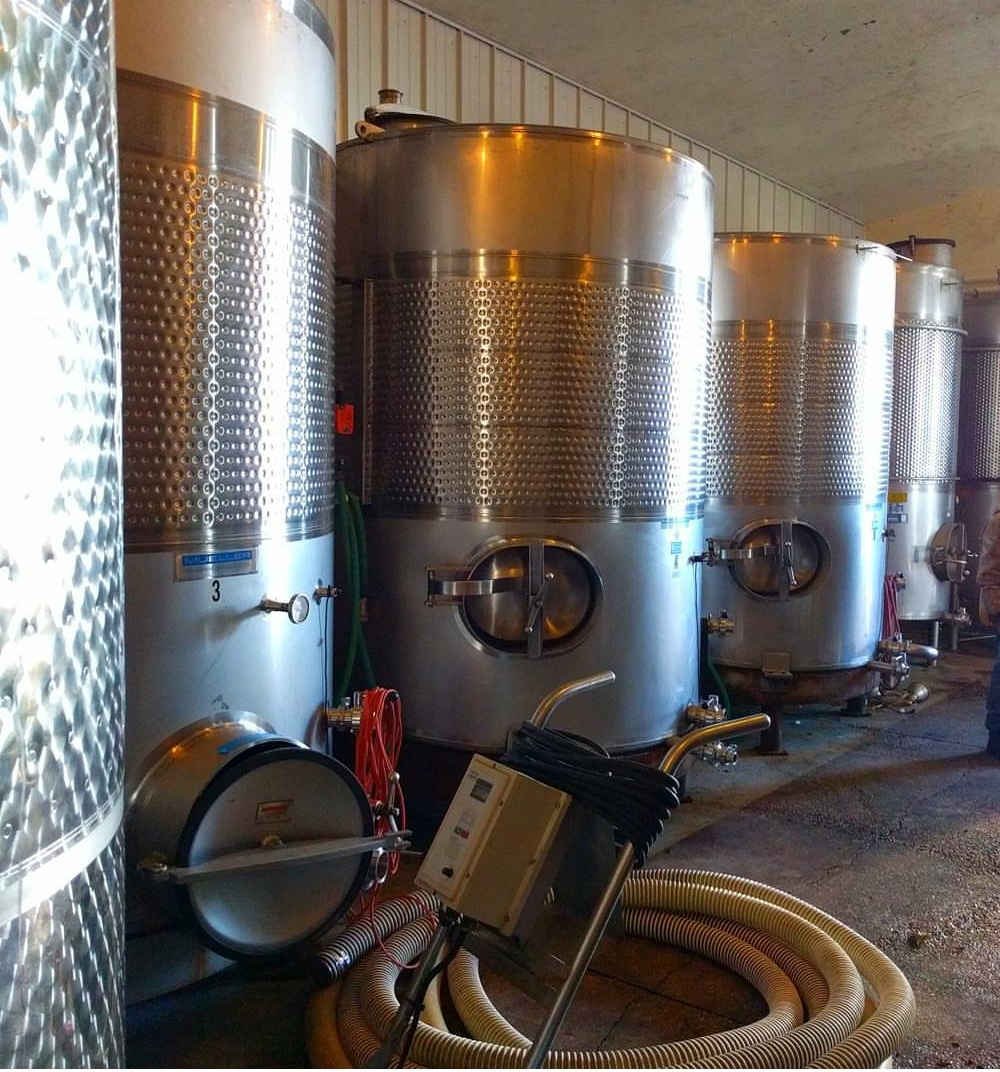
For Chardonnay once picked grapes have little contact with skin and goes through bladder press for two hours. The grapes are tumbled and press then moved to a cold temperature steel barrel for two weeks to settle juice. Next it’s moved to another steel barrel kept at 65 degrees for 7 to 8 month. After the wine is filtered to clean sentiments and clarify, then bottled as a still wine. For the red grape variety all grapes are fermented together with skin and left in steel barrels for 2 weeks. Yeast is then added to convert sugar into alcohol, then goes through a press to separate grape from juice after fermentation. Next the wine sits in oak barrels for up to 18 months to 2 years, these oak barrels are made from French and Hungarian oak and are lightly toasted. To maintain flavor they allow gravity to filter the wine which I found interesting, so the reds are bottled unfined and unfiltered. Also for Harmony Vineyards they buy 2 brand new barrels each year and 18 used barrels. LENZ produces 500 cases for Harmony vineyard each year and use 100% natural oak corks. Additionally we must keep in mind this is the vinification process the use for Harmony vineyards.

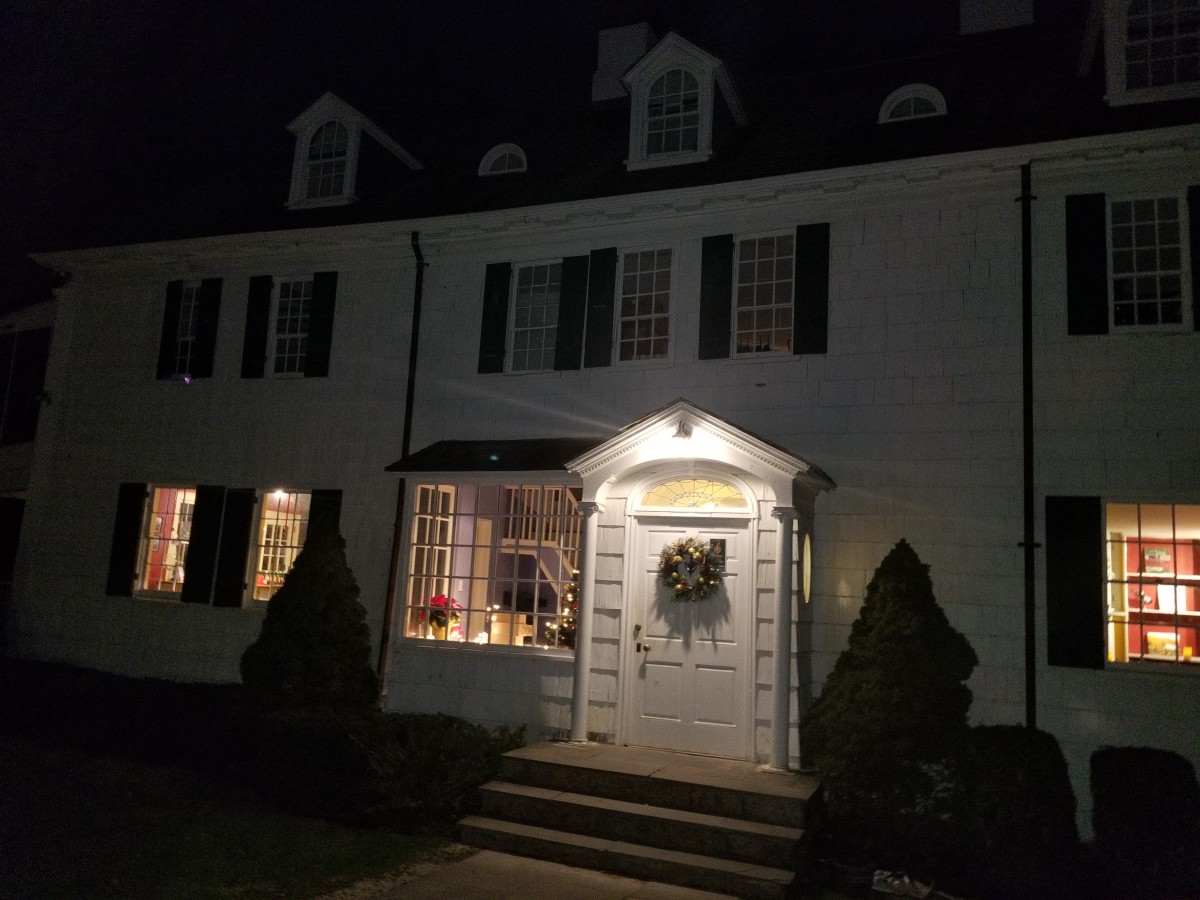
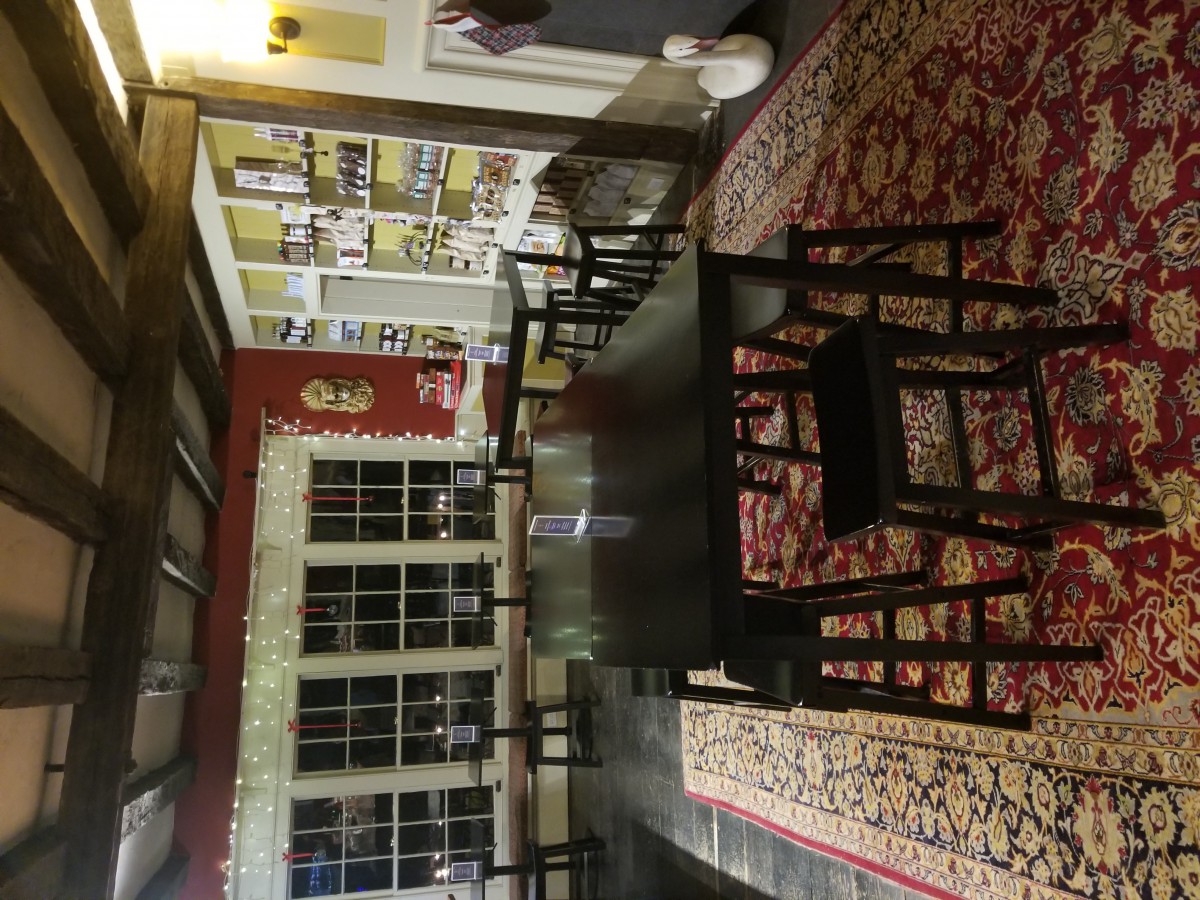
Going back to the tasting room which is in “The Old East Farm House”, the design is very warm and homey. In the tasting room I met Fabio and Brittany, they were really nice and eager to help me do my project. The reason for that was that my friend and I were the only people there at the time. When I asked about the viniculture(how the grapes are grown) of the grapes, beside the the variety and that the whites stay on the vines for a 1 -year cycle and reds stay on the vine for a 2-year cycle, they didn’t really know much pass that. One of them actually started googling answers for me. Plus since wine production isn’t done on site like I mentioned before, they couldn’t remember how the wine is made. Which is why I had to call LENZ. So I would say my tasting room personnel’s weren’t  really that knowledge. And they didn’t have to explain the wines to me either because the notes were on the menu.

For the tasting the wines are poured into these 2-3 oz glasses which I think is a smart way to give the illusion you have more wine than what you were actually served. The wines we tried was the Chardonnay: 2014 Grand Reserve and 2015 Reserve. The red blends were 2014 Medium body, 2013 Medium body, 2012 Medium body, 2006 Light body. Our favorite was the 2014 Grand Reserve which had hints of lime, lemon, grapefruit, and green apple. The wine was clear with a buttery finish and would have gone good with a salmon. Our favorite red blend was the the 2014 Medium body which had hints of cherry, cinnamon, plum and vanilla. It had a lot of tannins, I would have paired this with filet mignon with a side of roasted potatoes and snow peas. Each bottle has about 15% alcohol. Also something important I learned was that 100% of the proceeds go to charities such as Island Havest, City Harvest, The PinkRock, The Stony Brook Foundation, The East African Center for Empowerment of Women and Children, etc.

In the end  besides getting there late I really enjoyed the trip because it allowed me the opportunity to visit a vineyard, which is something I probably would never think of doing. Also since studying wine I felt more confident going into the winery because I have a little wine knowledge. Which was quite helpful since the staff wasn’t much knowledgeable. I really appreciate these types of projects and looking forward going to other winery, vineyards, and wine tastings.

Harmony Vineyard

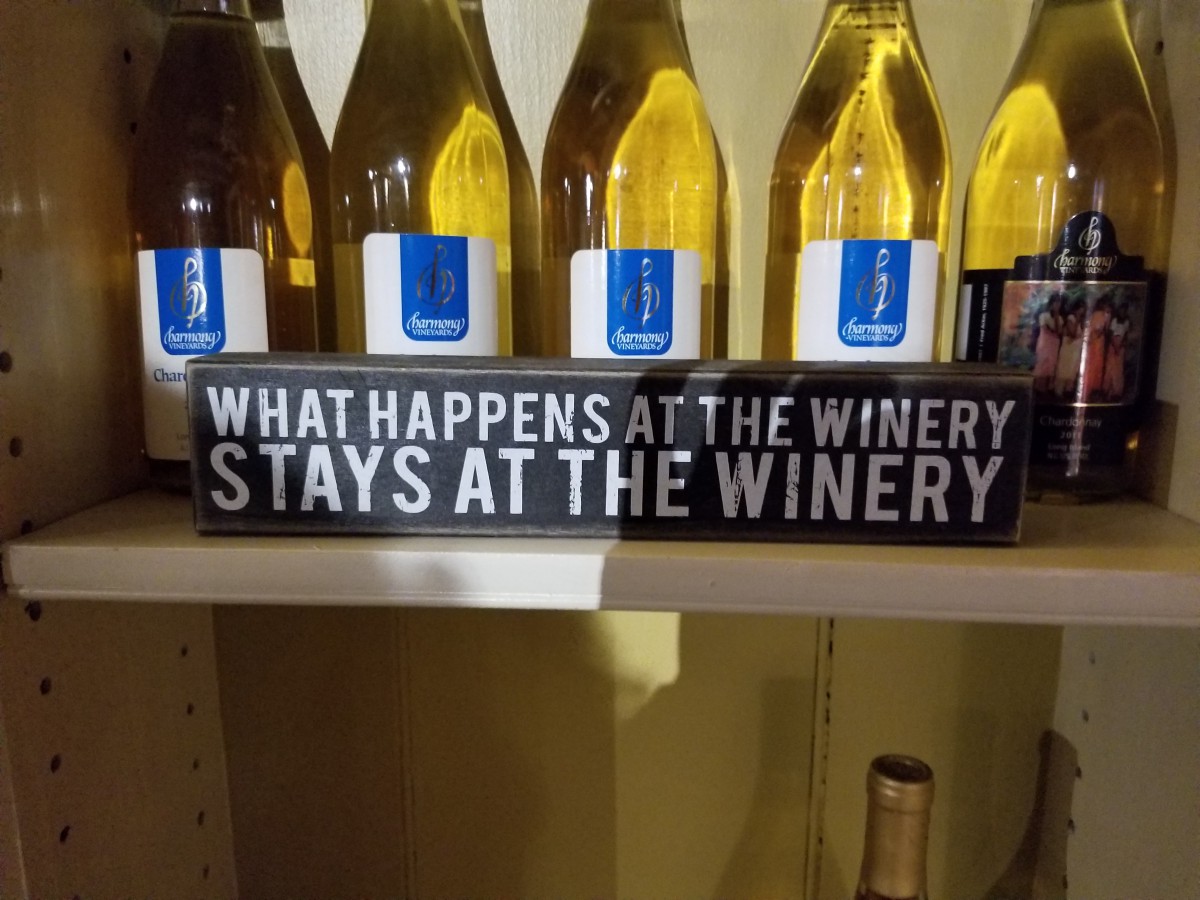
Harmony Vineyard Chardonnay label and marketing.

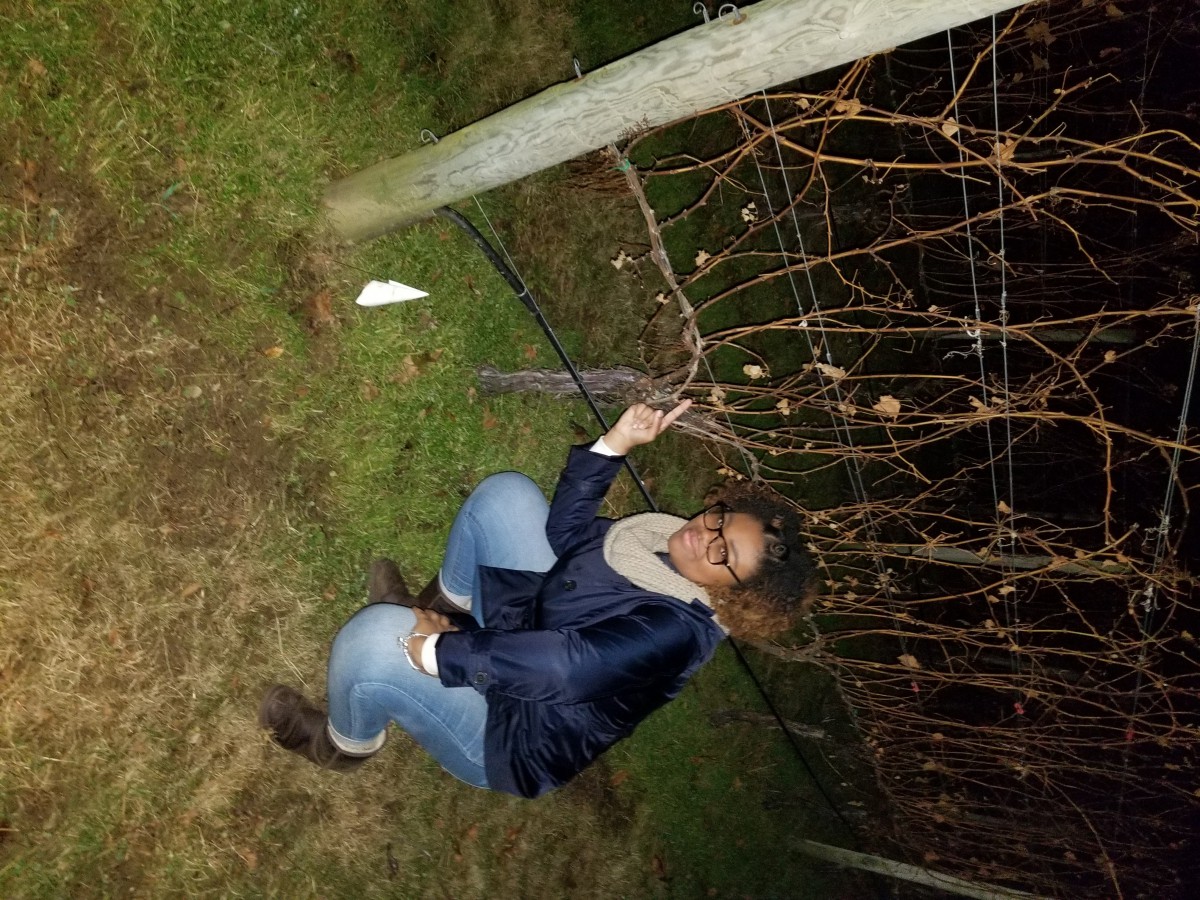
Me examining vines in the vineyard

Taken from the LENZ instagram page. Red blends fermenting in oak barrels.

Taken from LENZ instagram page. Steel Barrels where either white or reds ferment.

The Old East Farm House

Tasting Room

Brooklyn Brewery

I just so happened to go on a Saturday the company was throwing a Holiday party for the employees so it did affect the times of the tours. Nonetheless I was the first person online because the website did say they gave out tickets an hour before the tour, I thought the tour started at 11:30 but instead it started at 12pm. Upon entering they gave us the opportunity to buy beer before the tour started. The Brooklyn Brewery beer is made of four main ingreidents which are 95% water, malt, and barley which is essentially the same thing  malt is the back bone to their beer and barley is very sugar rich and enzyme rich. The sugar in barley helps to make alcohol, lastly, hops are added in to make the beer bitter, add flavor and aroma, also preserve the shelf life of the beer. The process of beer making is they grind up all the grains and sugar rich in their mill room then it gets sent on the conveyor belt to the mash tub, the mash tub gets filled with very hot water with the sugar rich grain a mash is made in comparison to porridge. The mash is then sent to a louder ton which separates the sugary liquid  from the grain, the sugary liquid is unfermented beer that is then transferred to the brew kettle. The liquid boils in the brew kettle and hops is added in because when hops is exposed to the heat it breaks down, releases acids that are needed to bitter up the beer. Everything then gets sent to the whirlpool that separates the proteins and the hop particles that isn’t wanted in the beer. After the proteins and hop particles are out it gets sent to the fermentation unit. Brooklyn Brewery has 14 fermentation tanks filled with two types of beers an Ale or a Lager, Ale ferments faster and at a warmer temperature, lager will ferment and sit in the tank for 2 and a half weeks at a colder temperatures. The beer is either bottled or kegged the machine they have will do 120 kegs in one hour and the bottle system is Italian made it can bottle 7,000-12 ounce bottles in one hour.

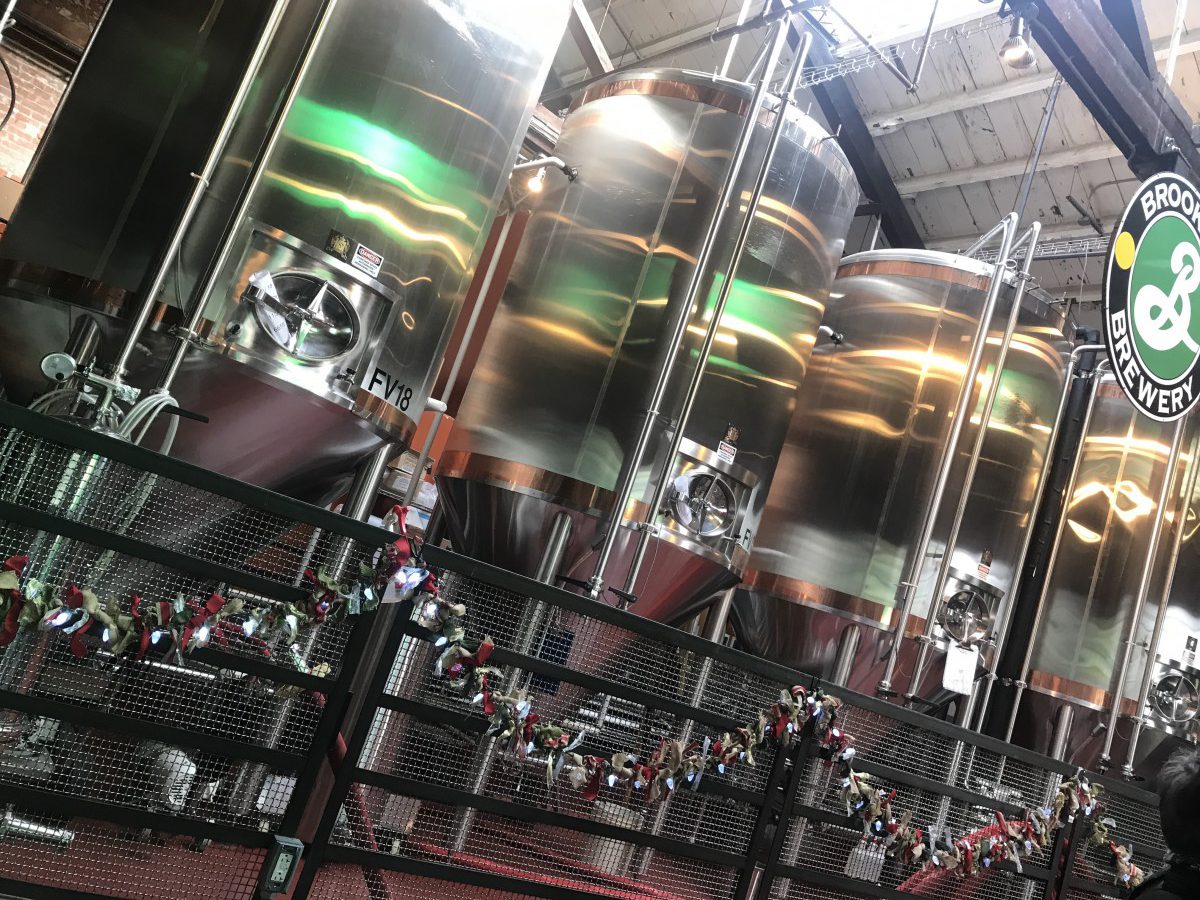
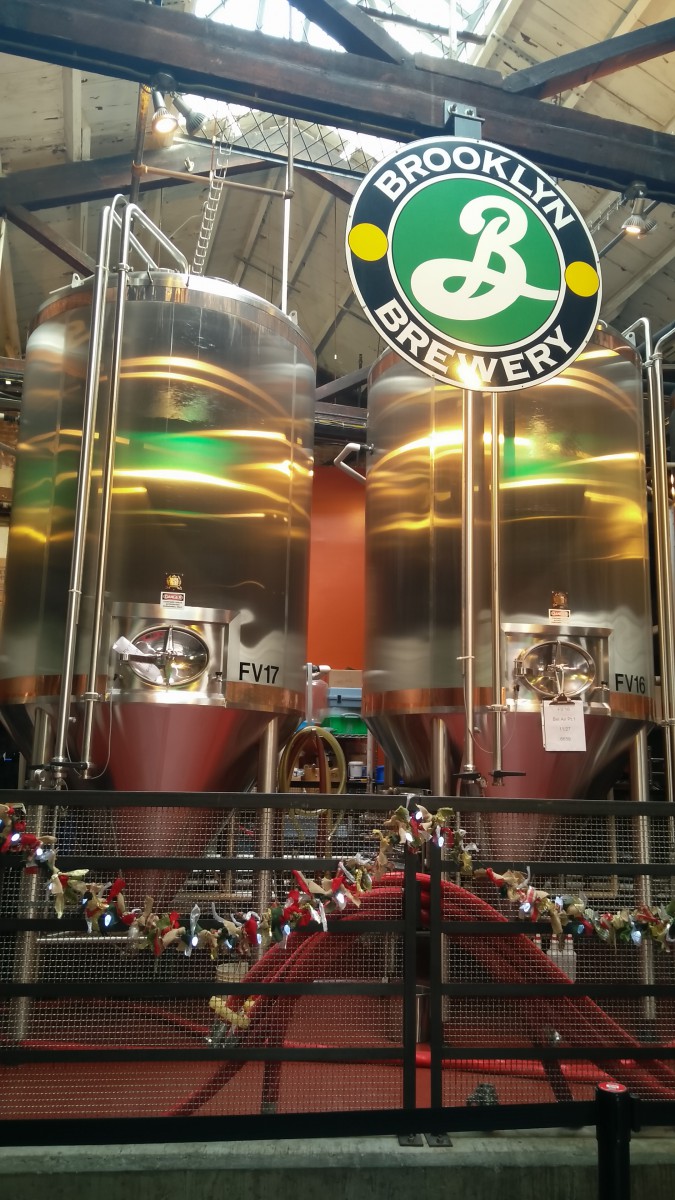
The tanks that are in front of the entrance upon entering

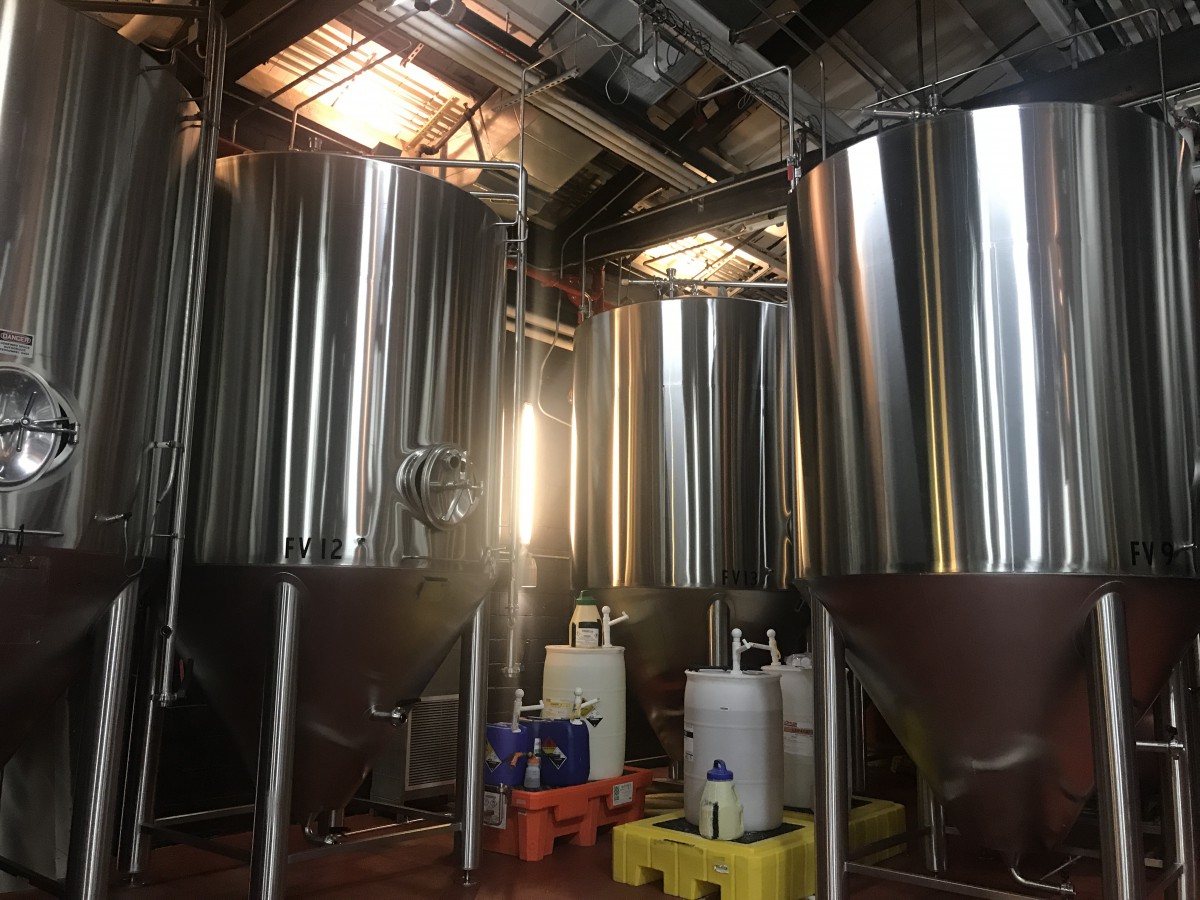
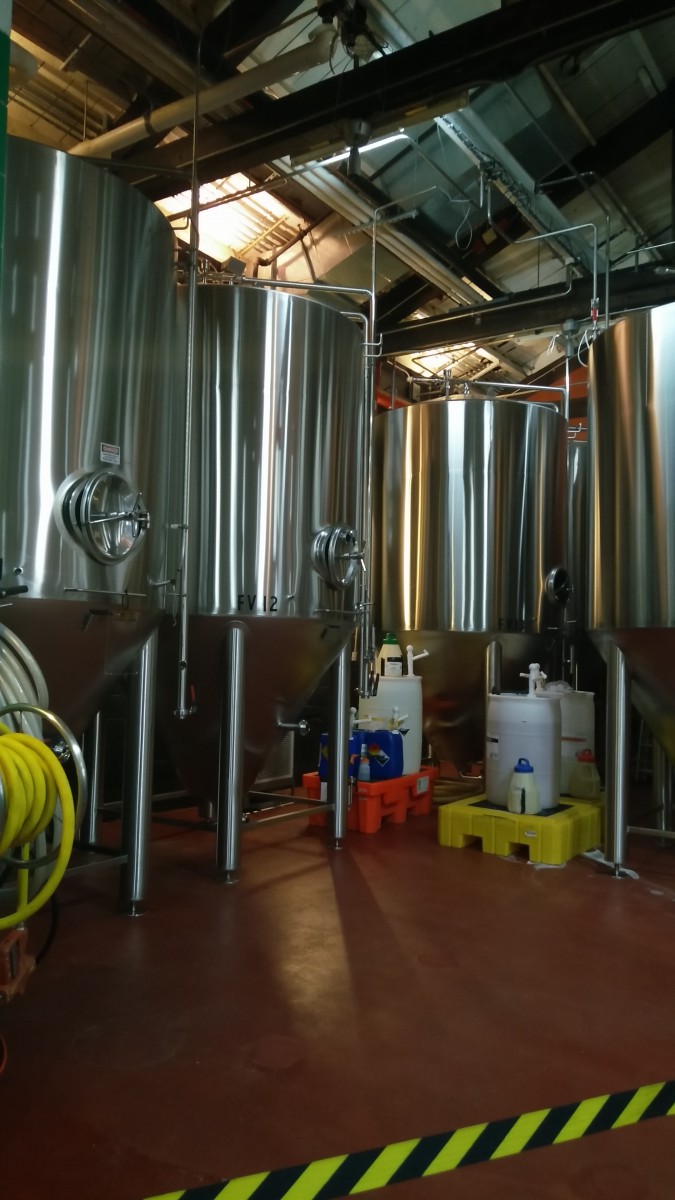
Fermentation tanks that hold up to 50 barrels of beer.

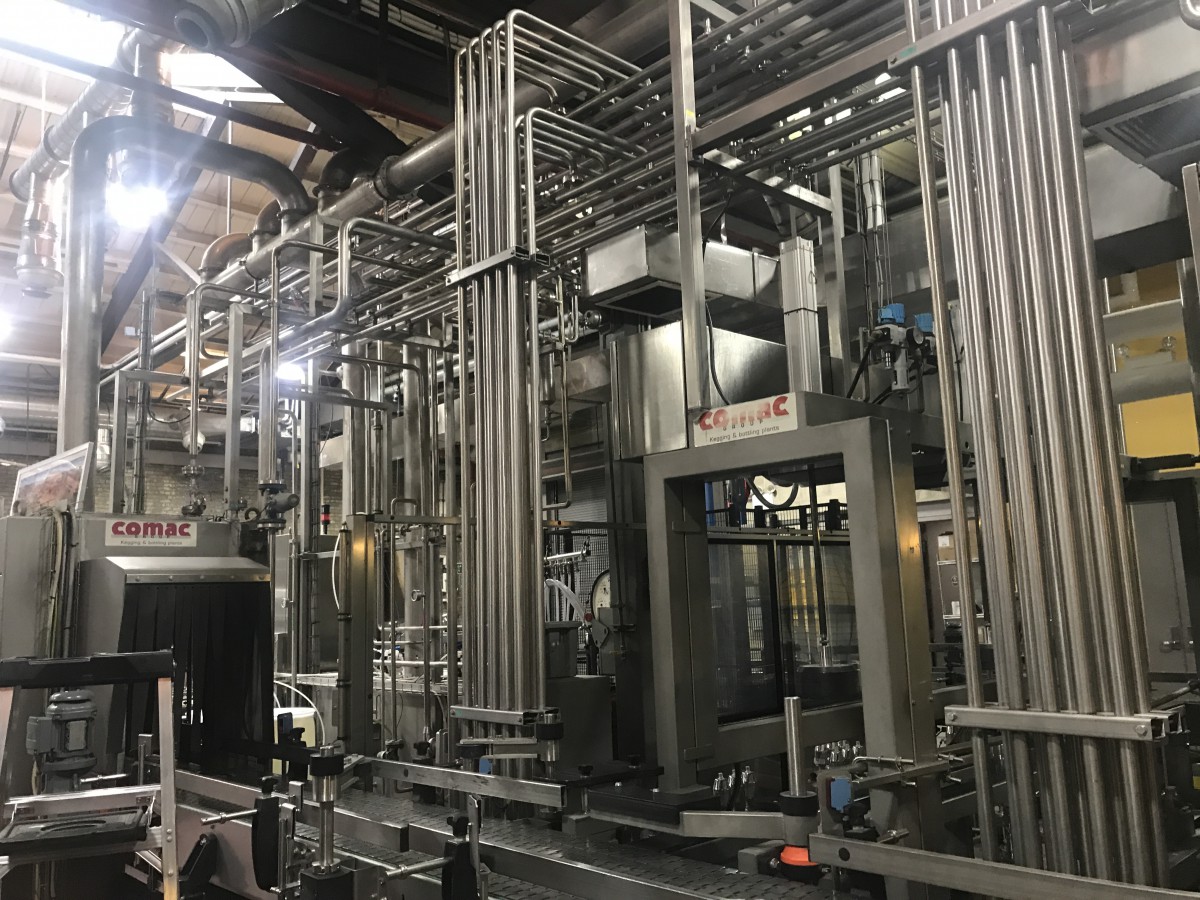
The system that can keg 120 kegs in one hour

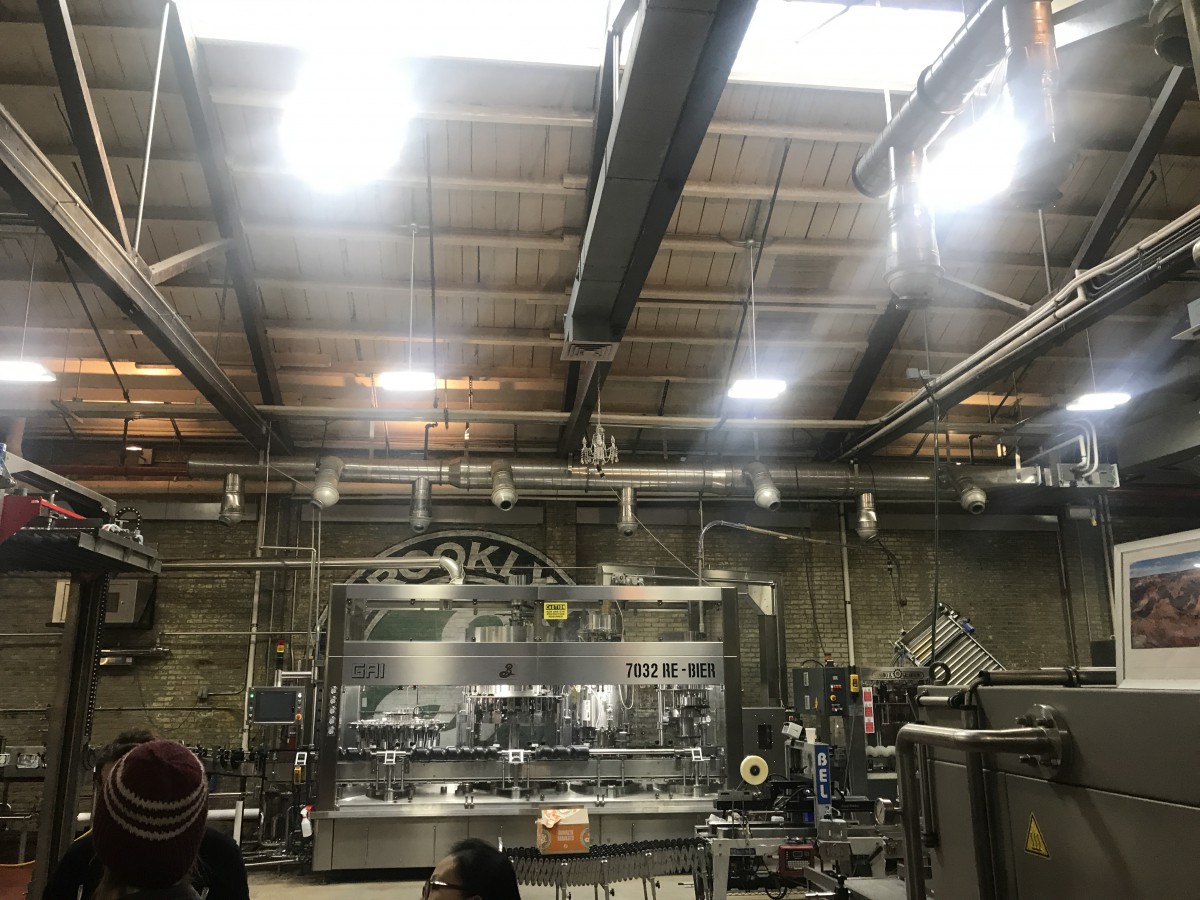
Italian made bottle machine that can bottle 7,000 12 ounce bottles in one hour


Bedell Cellars

During this semester in Wine and Beverage Management, my knowledge of wine and spirits world  has been enhanced.Through the study of viticulture, vinification and production spirits production I now have knowledge to the point of I go into a wine shop I know what I’m looking for and what questions to ask.


For the winery visit project I decided to go to Bedell Cellars on the North Fork of Long Island. This visit was set up by the wine director at my job, he put me in contact with the Regional Sales Director, Whitney Beaman, and was able to set up a reservation for November 25th at 12pm to visit. Whitney made sure we received a VIP complimentary tasting flight as well as a tour of the vineyard and Cellars.

Displaying IMG_0202.HEIC

It was a long ride on the LIRR but the scenery of Long Island and traveling over the Long Island sound was so peaceful and gave me a chance to just relax and unwind after the busy Thanksgiving weekend at work.

Displaying IMG_0168.HEIC

Long Island Sound

Displaying IMG_0169.HEIC

Once we arrived over the sound!

When we arrived at Bedell, we were greeted by Brad who attended to use throughout our visit. We were able to chose our seats and when we sat, Brad offered us the tasting flight menu which showcased a cider, white wine and three red wines.


I love cider so I was pretty happy we start off with that. Brad explained to us that the the cottage cider is served to help cleanse the palate between courses as well as to awaken the palate.

Displaying IMG_0173.HEIC

Wine list

He then explained that the cottage cider is made by apples grown in the cottage at Bedell’s historic farmhouse on site which was built in 1710. The cottage cider was very crisp and fragrant with a hint of tartness, perfect way to introduce a flight menu.

Displaying IMG_0197.HEIC

Bedell cultivates there own yeast instead of purchasing commercial yeast.

The next on the menu was the 2016 First Crush White which is a blend of 40% Chardonnay, 30% Gewurztraminer, 20% Sauvignon Blanc, and 10% Riesling. This wine was one of my favorites with a nose of tart apples, a taste of apple and citrus and a light fresh balanced finish. This wine was pretty calm and would be something a beginner would appreciate.


Brad suggested that we take a brief break before the red wines to take a tour. We first went outside where the have beautiful white picnic tables overlooking the rows of vines, offered for seating when the weather permits.

Displaying IMG_0175.HEIC

White picnic tables

Displaying IMG_0181.HEIC

More outdoor seating

Even though the vines are in dormancy, seeing the rows upon rows of vines was mesmerizing.

Displaying IMG_0178.HEIC

Found some Cabernet Franc grapes left on the vine.

Brad informed us that Bedell is arguably the third oldest vineyard in the North Fork.

Displaying IMG_0179.HEIC

Miles of grape vines

On the wall was a vine with the roots intact, I asked what it was and Brad told me that’s one of the oldest Chardonnay vines the have planted in 1980.

Displaying IMG_0186.HEIC

Destemer for white wines

They put it up for display and every now and again they will plant it, considering the vine is over 30 years old the vintage made from those vines will be more full bodied and robust compared to the younger vines.

Displaying IMG_0191.HEIC

Stainless steel fermentation tanks

We then went to into the cellar and bottling room and it was nice to see all of the French oak barrels and steel tanks.

Displaying IMG_0182.HEIC

French oak barrels- All red wines see the oak and whites are destemed and fermented in steel tanks

The French oak barrels as well as the steel tanks are labeled with the grape variety, date and time, and a thermostat that keeps the wine at a constant temperature.

Displaying IMG_0185.HEIC

Stainless steel tanks that hold between 1300 and 2500 lbs of delicious wine

Displaying IMG_0183.HEIC

Large oak tank

In the cellar there was a glass case with different types of soil and gravel that displays the soil type of the North Fork.

Displaying IMG_0198.HEIC

North Fork terrior

We were informed that the soil there is rocky and sandy and fertile due to the glaciers that created the North Fork. The climate is maritime due to its glacial soils, Long Island sound and Atlantic Ocean to the east.

Displaying IMG_0196.HEIC

Labels!

Displaying IMG_0196.HEIC

Malbec labels


We then went to tour the bottling room which is small but efficient bottling and labeling twenty bottles per minute.

Displaying IMG_0210.HEIC

Presidential inauguration ceremony dinner menu for Barack Obama’s second term.

Brad told us that Bedell’s 2009 Merlot was the first ever New York wine to be served at Presidential inauguration ceremony for Barack Obama’s second term.

Displaying IMG_0207.HEIC

Once we returned, we were poured the third wine, the first red wine of the day named Taste Nouveau 2017 created using the classic carbonic maceration technique by fermenting whole grape clusters, 90% Merlot and 10% Malbec. I’m not to fond of red wines but surprisingly the second red wine on the flight menu was my favorite, it was a 2015 Cabernet Franc.

Displaying IMG_0188.HEIC

The nose on this wine was shocking it had the aroma of farm fresh room temperature butter. This wine is fermented in the oldest oak barrels available on site, which gives the wine immense vanilla taste and the nose of buttery baked goods. To finish of the flight menu was Taste Red 2013, a full-bodied blend of 50% Merlot, 30% Syrah, 14% Petit Verdot, 4% Malbec and 2% Cabernet Franc. I liked the last wine but the ripe tannins were a little much for my taste.


While we had our tasting I ordered some farm fresh goat cheese and crackers and honey to accompany our tasting. Having that as a palate cleanser made it easier to enjoy the red wines.

Displaying IMG_0171.HEIC

Small bites

Overall, visiting Bedell was the perfect thing to do on a Saturday. A chance to have a day off from the hustle and bustle of the city. This marks the beginning of my interest of visiting wineries, it was so intriguing to have a view of how wine is produced. I’ll be sure to visit Bedell and other vineyards in the North Fork when it’s warmer and the grapes are flourishing.

Touring The Brooklyn Brewery

Brooklyn Brewery Entrance, right away introduces the guests with huge vessels of steel fermentation tanks.

I had the good experience visiting the Brooklyn Brewery this weekend, as an alternative option. Although I’m not a big fan of beer, I thought it would be nice learning some new things about how they are brewed. Before the tour I was limited to only knowing that beer was fermented and made from a grain.Walking into the Brewery the staff was pretty friendly and conveniently gave me tickets to the tour right away before I could ask. I was guided to the tasting room which was full of people also waiting for the tour.

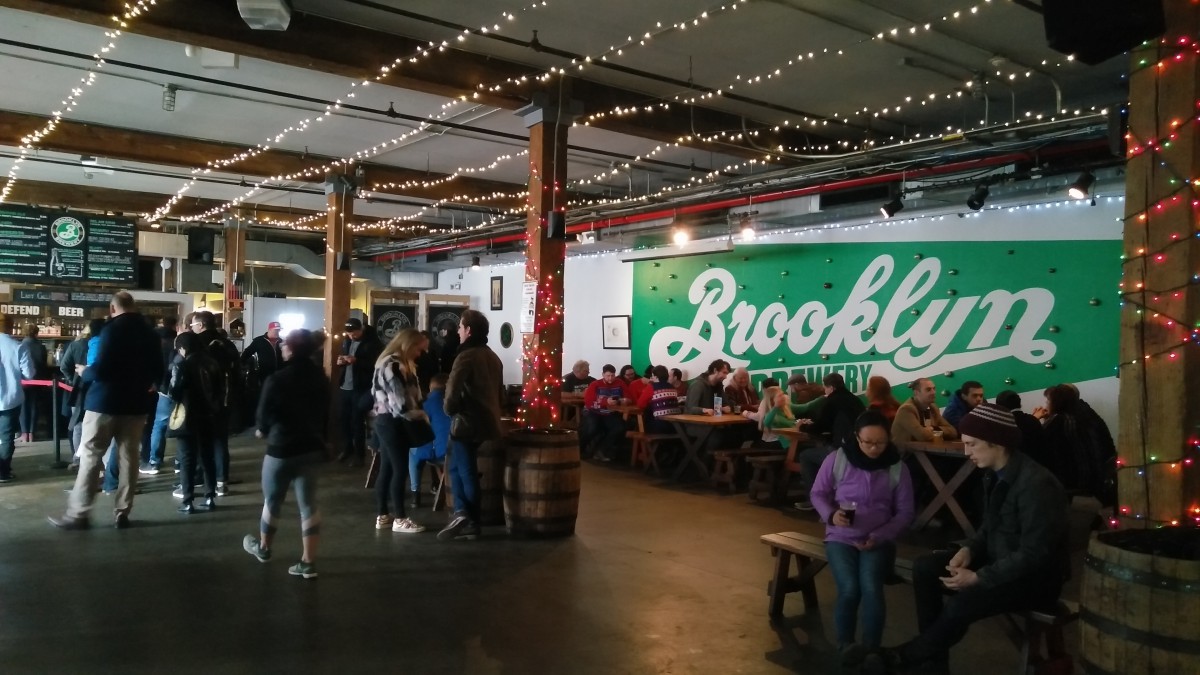
Tasting Room and waiting area.

Our tour guide was Evan, he was a knowledgeable about the history of the Brewery company as well as the heavy machinery. Evan mentioned he’s from New Jersey to reference their beer distribution, they distribute a lot of beer to other many states and countries most notability New Jersey, the UK, Switzerland, St. Louis etc. He then began informing us on the four basic ingredients of making beer, which was malted Barley (Grain), Hop, Yeast and, lots water is also added of course. He passed around a jar of barley and hop for us to smell. The barley looked like a typical grain with a nice familiar smell to it, while hop was much stronger on the nose and looked like small round moss pebbles.Evan pointed out how the process works, and how it starts with malt and water. He showed us the filtration system they use to separate the water form the barley from the water. Then is transferred to another kettle through to the tubes he pointed at connecting the steel kettles, he then explained how hop is added second an agent to give bitter flavors to the beer. While the yeast creates sugar content as it ferments so it give balance to the beer product, before fermentation the mixture is transferred to a wort chiller as well.

Brew kettle were ingredients are added such as hop to the water with barley, before the mixture is fermented in yeast vessels.

Fermentation tanks with yeast, the Brewery has a total of 14 vessels inside the building. They are tightly sealed to protect from oxidation.

Evan took us to another room and showed us more fermentation vessels and bottling machines that they operate. The machines can bottle 7000, 12.0z bottles per hour from the primary vessel. The company produces a lot of draft beer, which they also give out to taste in the tasting room. After taking us to the bottling room Evan explained the story of the owner Steve Hindy and the hardships he had gone through to create the Brooklyn Brewery since his days back in the Middle East.

Evan talked about the Brewery had been robbed at gun point before which was a twist from just talking about production, he explained the owners past and how he had live around danger. Then started Brewing beer in his home using a smaller system. Then coming to American and meet Steve that eventually become partners with and create a business. They were first called the Eagle Brewery and transitioned to the Brooklyn Brewery when they became more recognized in Brooklyn for their marketed malt beers. They had many competitors, but in the early 2000s distribution become more serious. He talked about the history for about 20 minutes or so, so there wasn’t much to learn after the bottling process. It was kinda disappointed me because the tour was to short to just be talking abut the owner for most of the time. I would of wanted to know more about the different varieties of beers made there.


Machine used to bottle the beer factory style, the bottles run through the belt.

Other perspective on kegging and bottling machine.

The initial bottling machine, the fermented beer run through these tubes and machines to be dispensed into bottles.


Circa Brewery

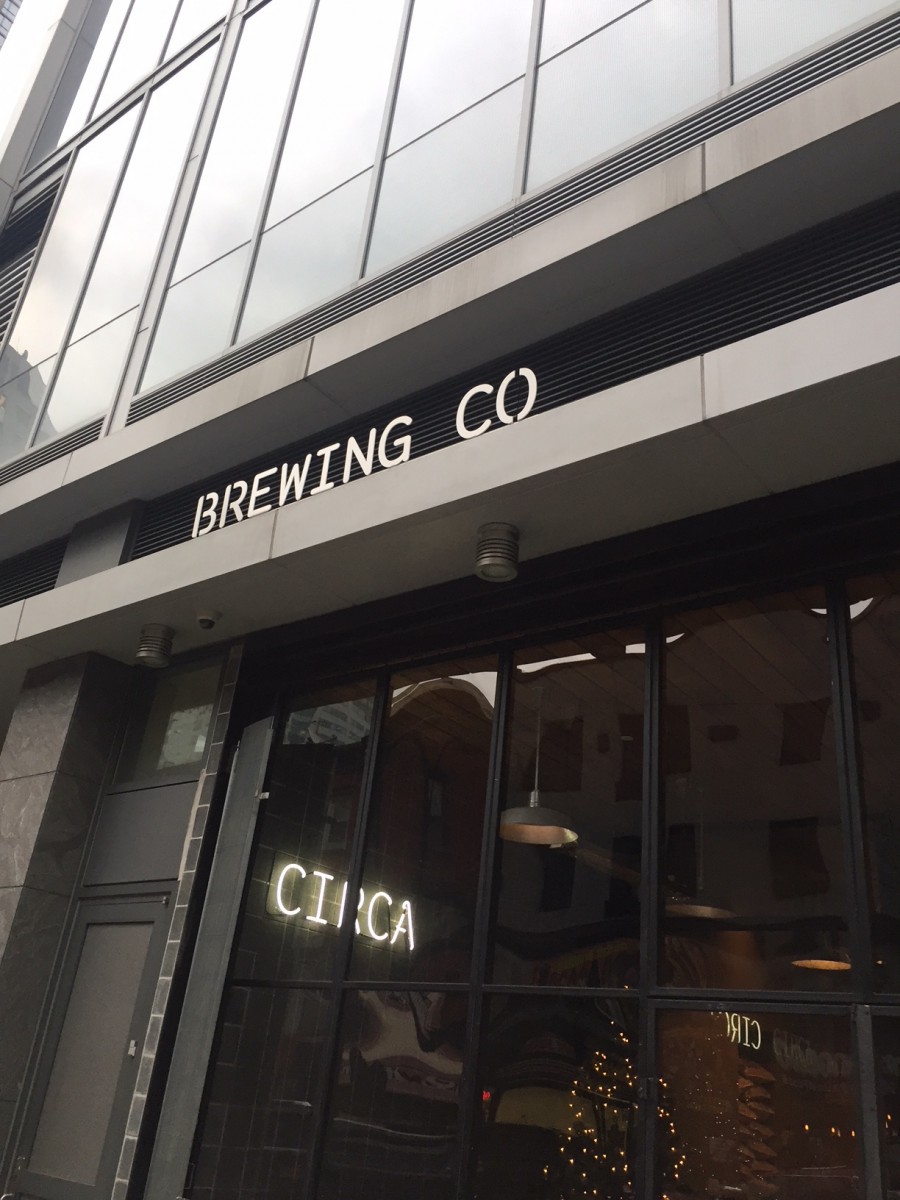
The brewery I visited was the Circa Brewery at 152 Lawrence street Brooklyn, NY. I called the brewery to ask if I could make an appointment and I spoke to the manager Rachael who was very helpful and kind towards me coming in. she asked if I was available to come in that same day to speak to Danny who would love to show me around.


A couple hours later I arrived, I was astonished by the look inside. It was a bar and a restaurant but with huge tanks all throughout the right side of the room. I immediately sat down at the bar just to see who and how someone would approach me. right away a young lady came to take my order as I replied that I called and was meeting Danny for a tour. She pointed to the guy on top of a tank cleaning it out and said that’s your guy come around so you can meet him.

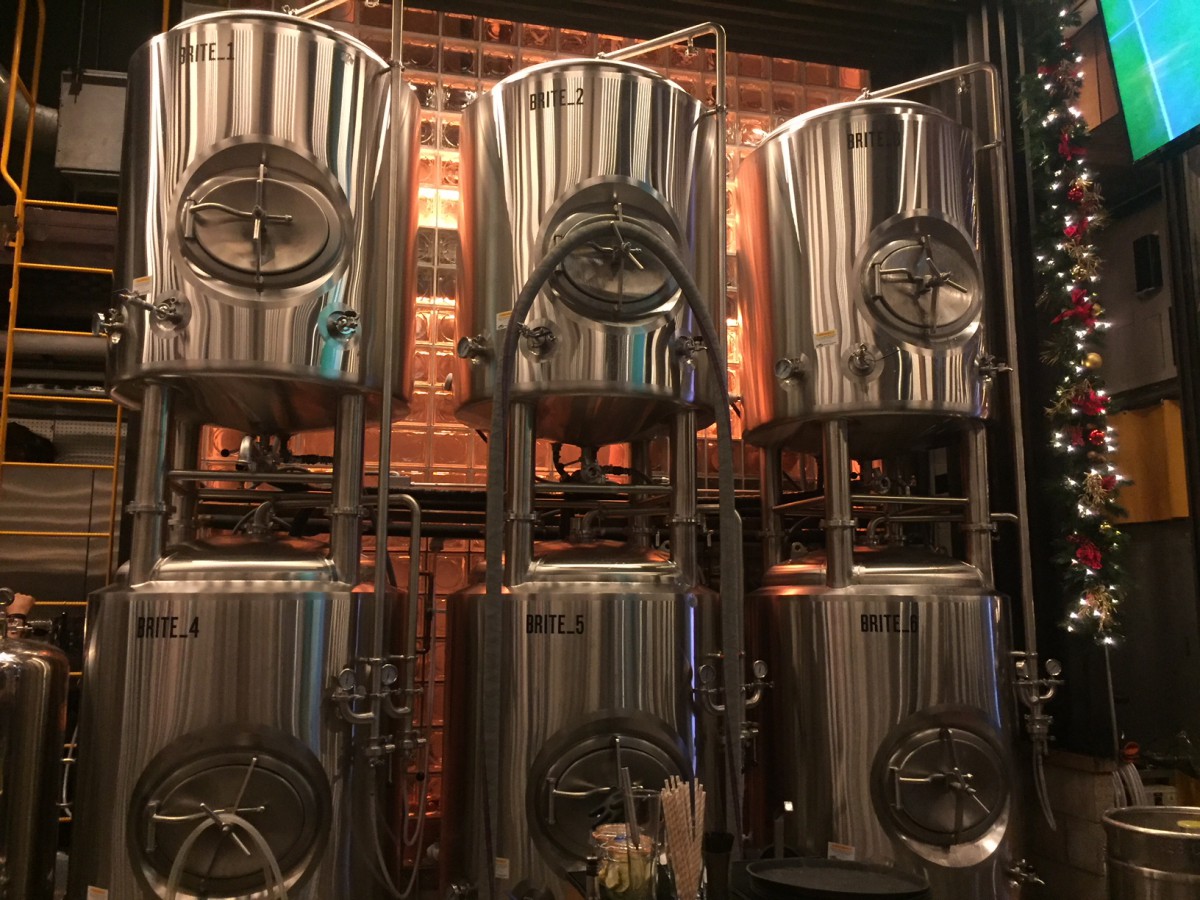
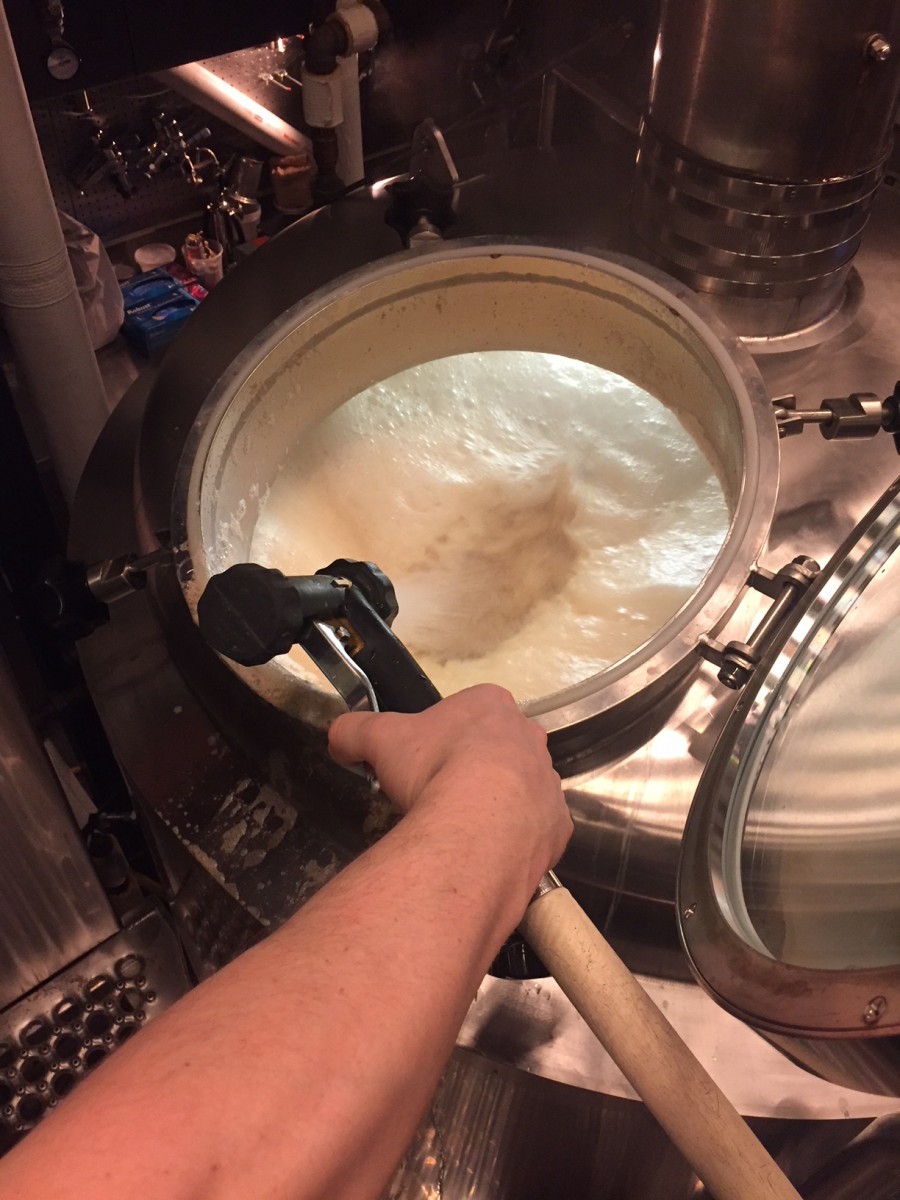
Danny shook my hand and told me to join him on top while the finishes the tanks. I immediately told Danny that I appreciated the time he was taking out of his work day to help me. I then asked him to explain a little about himself. Danny has been working in this field for 8 years professionally and about 4 years unprofessionally making beer in his home. He loves his job and says it is a two-man job to run all the production at that location.  He then stated the steps of making beer.  Saying that what is done in today’s day is different from the methods that were once used before. He first said that the four main ingredients for making beer are Barley, Hops , water and malt . He gets the barley and malt already mixed from farmers around the united states and the globe. Barley is a very important ingredient in this process but Danny said something interesting about how barley from Germany is used in German beers but if you take barley from Canada a lot of people would never see the deference. He then explained how every tank works differently the first two were for heating the liquid which contained starch sugar and gains for about an hour to an hour and thirty minutes. Its then cooled and transferred to the smaller tanks by the entrance which at that point the yeast would be added and left alone to eat the sugar. Once it is tasted and is cleared by Danny he then adds other flavors to get a certain type of beer. I asked him about how important the farmer is in this day in age as he replied it is very important to have a middle man because in new York there isn’t a lot of room to be growing the raw ingredients yourself all the time . I also asked him about the look in the venue and if it was a safety concern. He explained to me that the owners of the brewery thought it would be cool to have the tanks in front of the clients so they can see the hard works that goes in. also, to add a certain unique look that not every bar would have. It is indeed a safety concern and a health concern to have the process take place right next to the service but he replied that if there’s no law against it then all we have to do is keep it clean.


Danny then stated that he knows that I am studying wine but that the beer process is a lot more complicated than just stepping on grapes. As he laughed he made sure to relay that message to professor Goodlad and offered to do a class tour so he can go more intodepth with the beer making process


.

Young Whiskey Reviving The Distillery Scenes of New York

I heard from the Van Brunt Stillhouse Distillery from a peer. I did some research and found that they make Whiskey, Grappa, Moonshine and Due North Rum. In a 2013 Fall issue of MicroShiner magazine, they had a piece on Van Brunt Stillhouse where they explained the name of the company. Apparently the founders wanted to come up with a name that represented the history of distilling in Brooklyn. So they thought of naming it Van Brunt after Cornelius Van Brunt, an early settler and founder of Brooklyn.

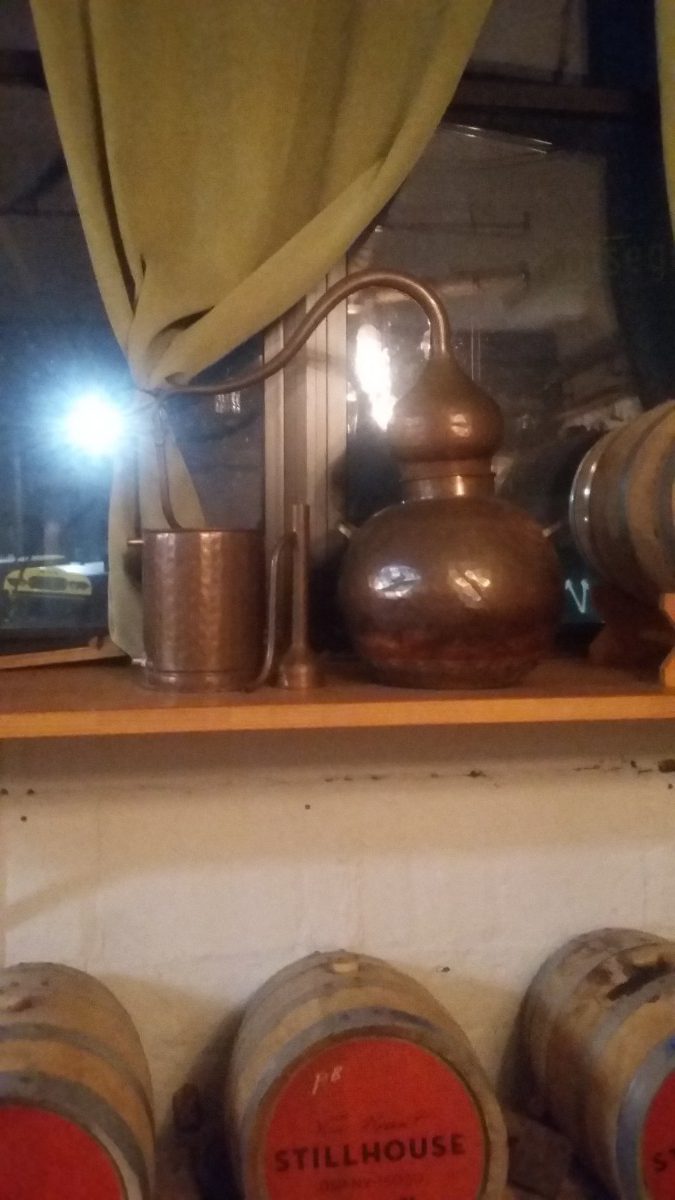
I made reservations for a tour at the distillery. I arrived by cab at 6 Bay Street in Red Hook, Brooklyn, New York. I entered this warehouse in Redhook, Brooklyn. The door had a computer printed sign that said Van Brunt Stillhouse Tasting Room and Tours. Seemed a little sketchy especially since it was really dark before 6pm. There were staircases going up and down and a big red door proper open. I went towards the door and saw an office space, wooden barrels, and sliding doors labeled, “Tasting Room. “No one to come greet us at the door and no idea where to wait for tours I went into the tasting room which showed signs of life. It was a cozy little place with uncovered low yellow light lightbulbs. A bar to the right, some counters to the left, some couches in the middle and an electronic fireplace in the far corner and wooden floors. By the window I saw a traditional single batch pot still, like the one we saw in the American History Channel video during class. I saw that the sliding doors were sliding stable doors you find in barns. I guess this is a city way of attempting to recreate barn-country chic.
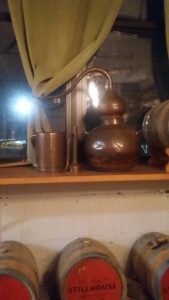
Old copper still pot

The bar tender Josh wore a black t-shirt with the Van Brunt Logo, silver-framed glasses, medium length chestnut hair, and a rugged trimmed beard. He looked like a good-looking nerd on steroids. He offered a seat at the bar and if I wanted any samples or drinks. There were bottles of whiskeys on the bar counter; American, Bourbon, Rye, Moonshine, Smoked Corn and Empire. Empire I had guessed meant that it was made in New York-the Empire State. I tried the Whiskey Cider, which had a little lemon juice and to my surprise, it tasted like a mellowed-out Whiskey Sour. It was a perfect balance of cider, that was not too sweet or acidic, and their American Whiskey. As we waited for the 6 o’clock tour to start, I looked at the spirits they have on the shelves on the wall. They have their Van Brunt Stillhouse Whiskeys and some draped with medals they’ve won. They displayed their gift box set that holds 2 bottles of whiskey, there was a “Van Brunt Stillhouse” beanie, bottles with clear liquid with a strip of masking tape and on it was written “Gin.” I overheard another guest ask about the gin and the bartender said that they made their own gin and that they are going to start selling it in the near future. On the counter there were card flyers that had recipes for some beverages they make with their spirits and a map that shows where they are located. And there were jars filled with grains that they use.
A gift box set and beanie that they sell with their logo
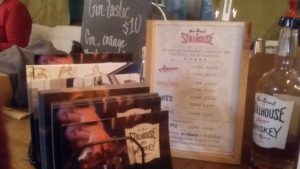
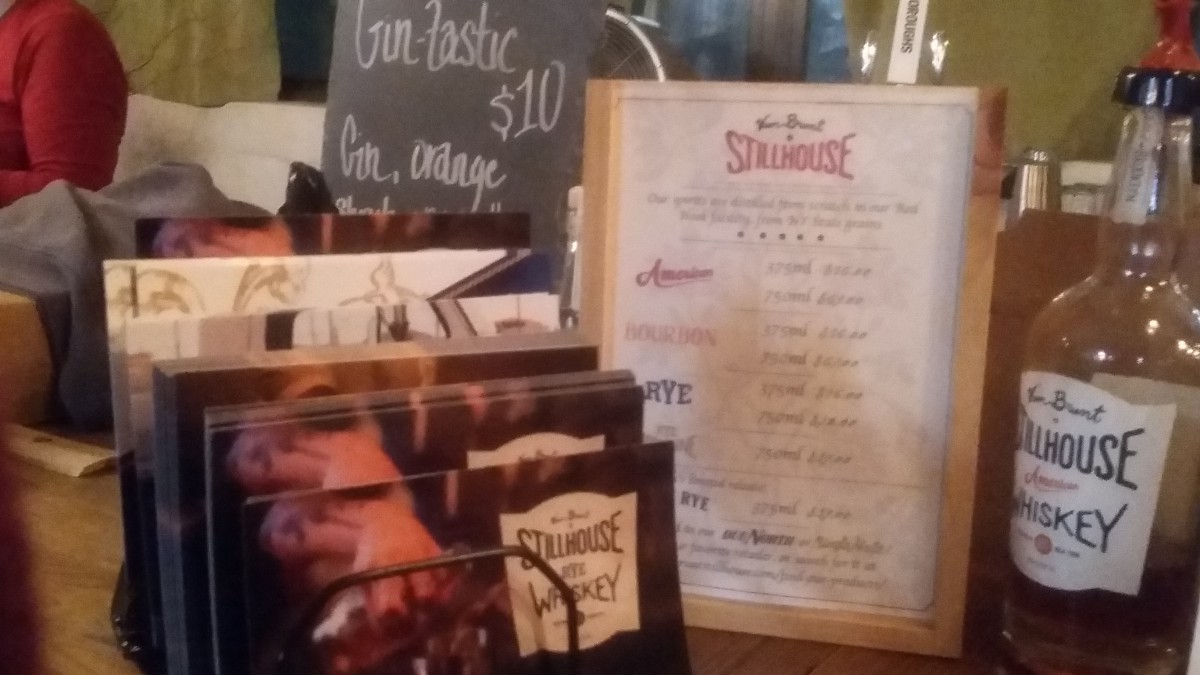
A $10 beverage menu and card flyers that have recipes of drinks with their whiskeys.
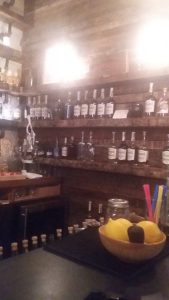
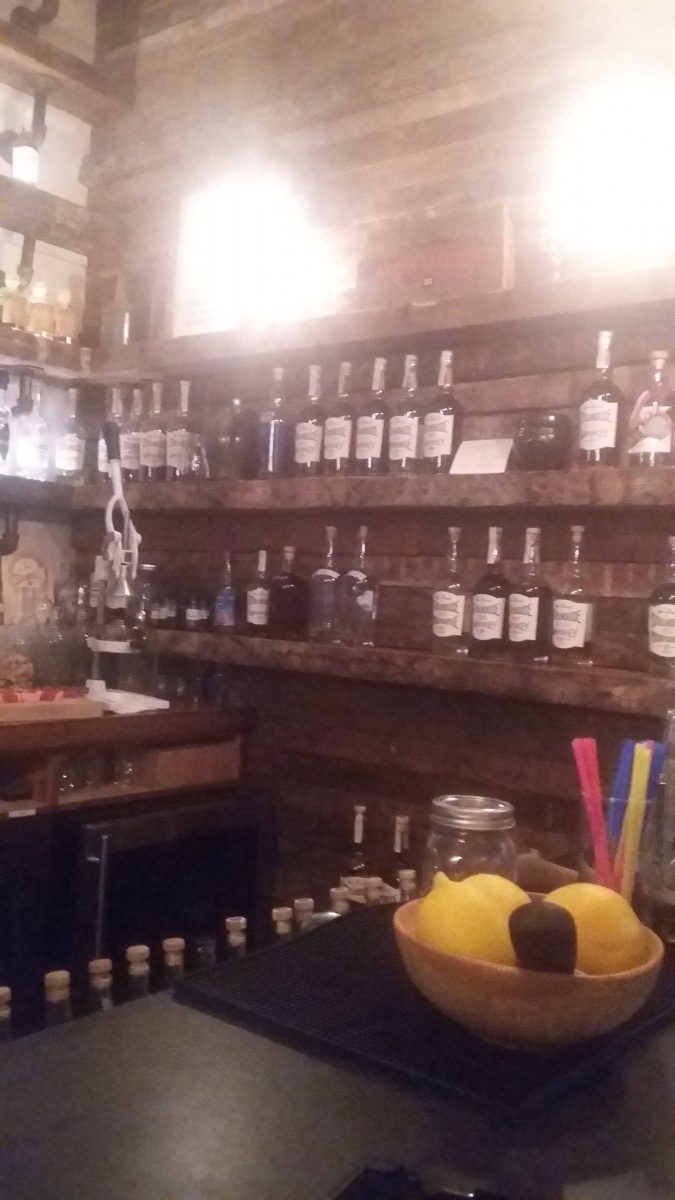
Bottles of the spirits they make, medals that they have won on the bottles to the right, and the gin they make in the middle of the bottom shelf.
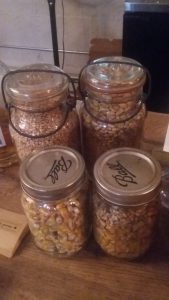
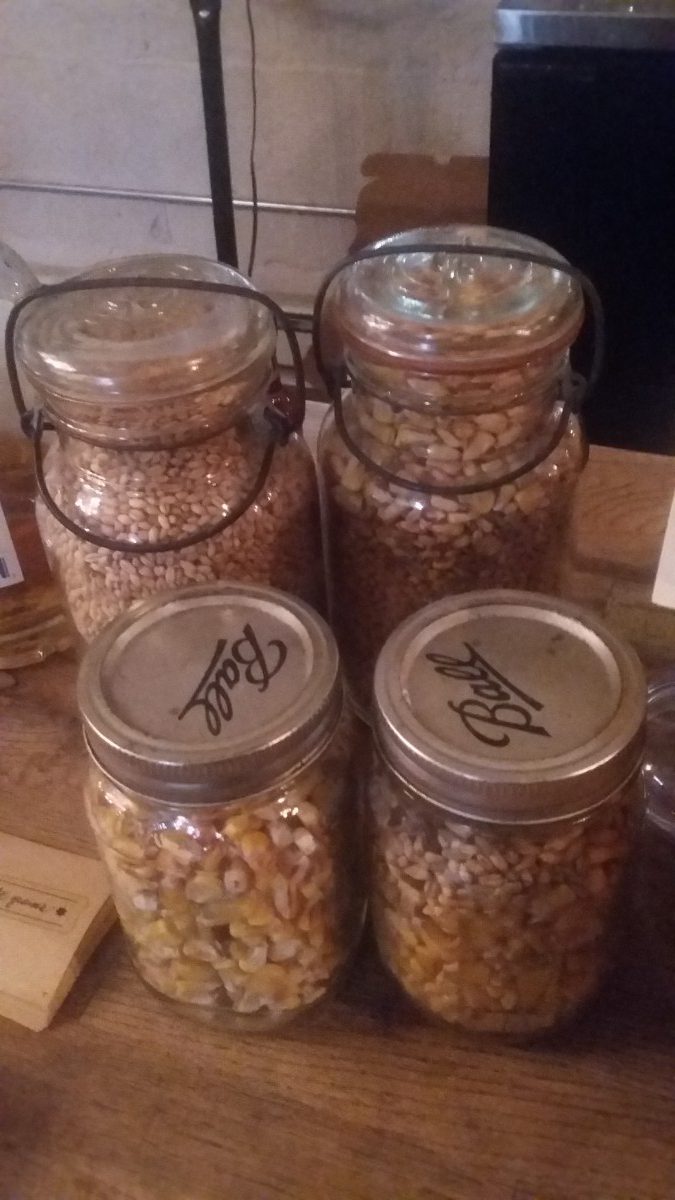
The four grains they use for the spirits; Rye, Corn, Wheat and Barley.
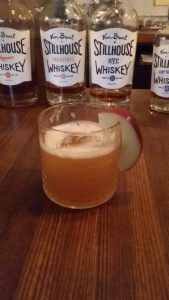
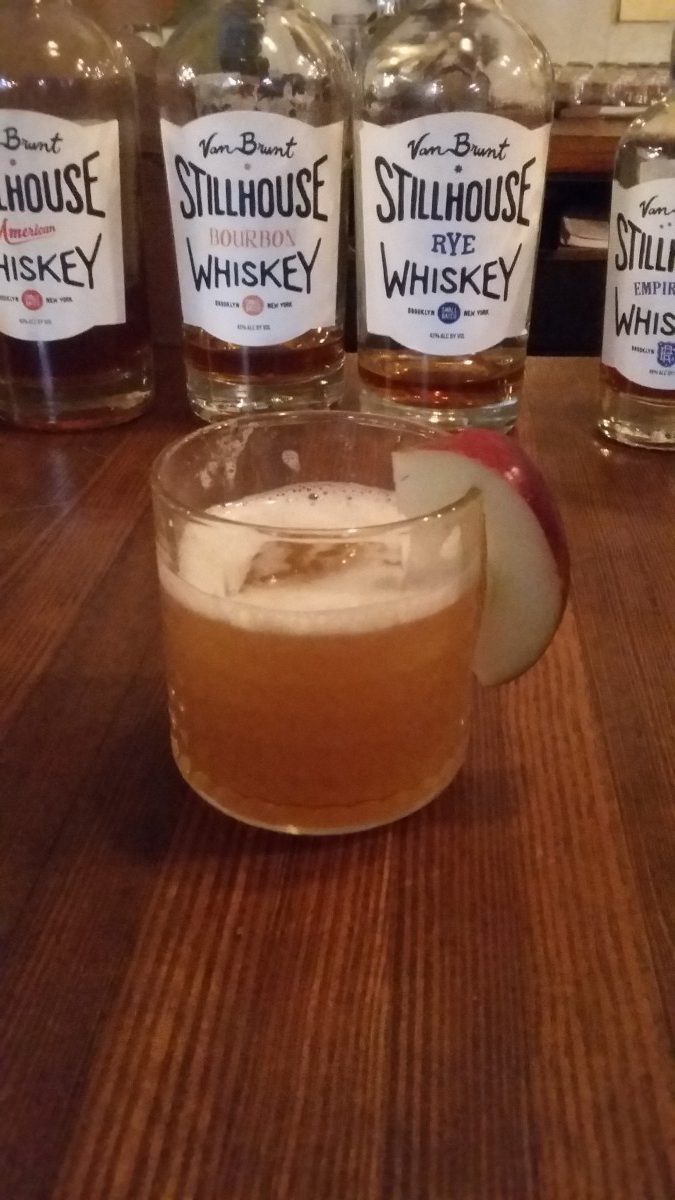
Whiskey Cider
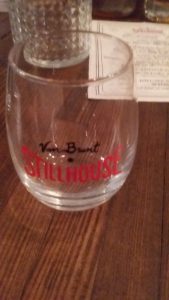
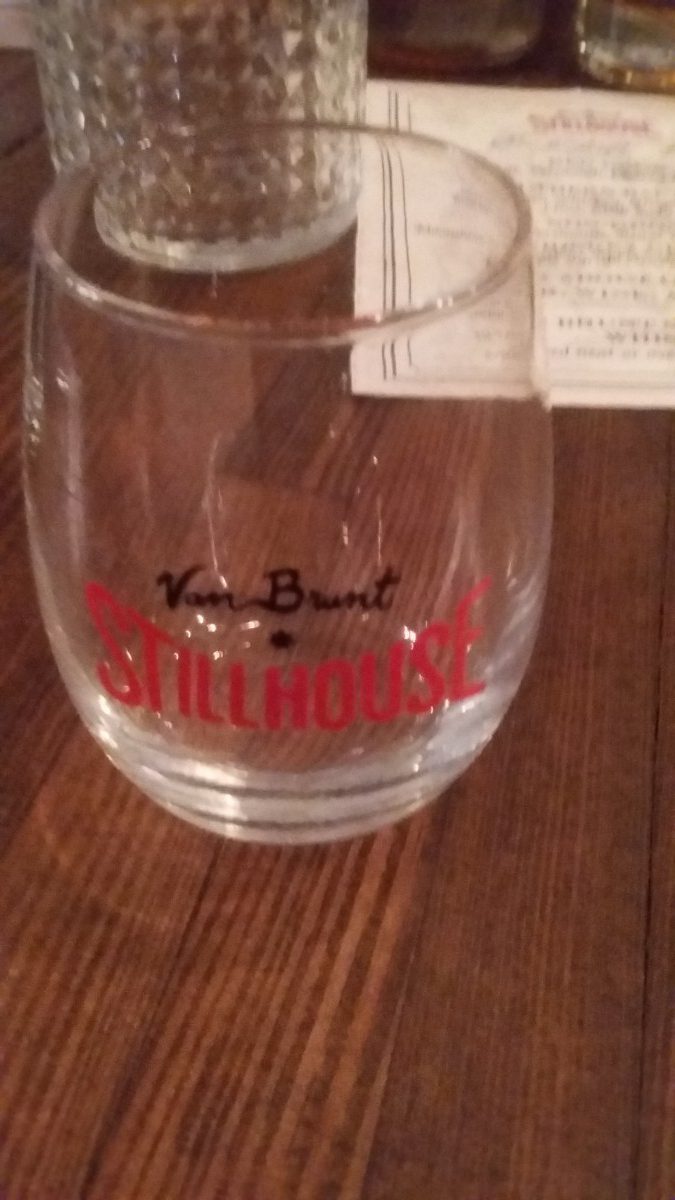
Van Brunt sampling cup

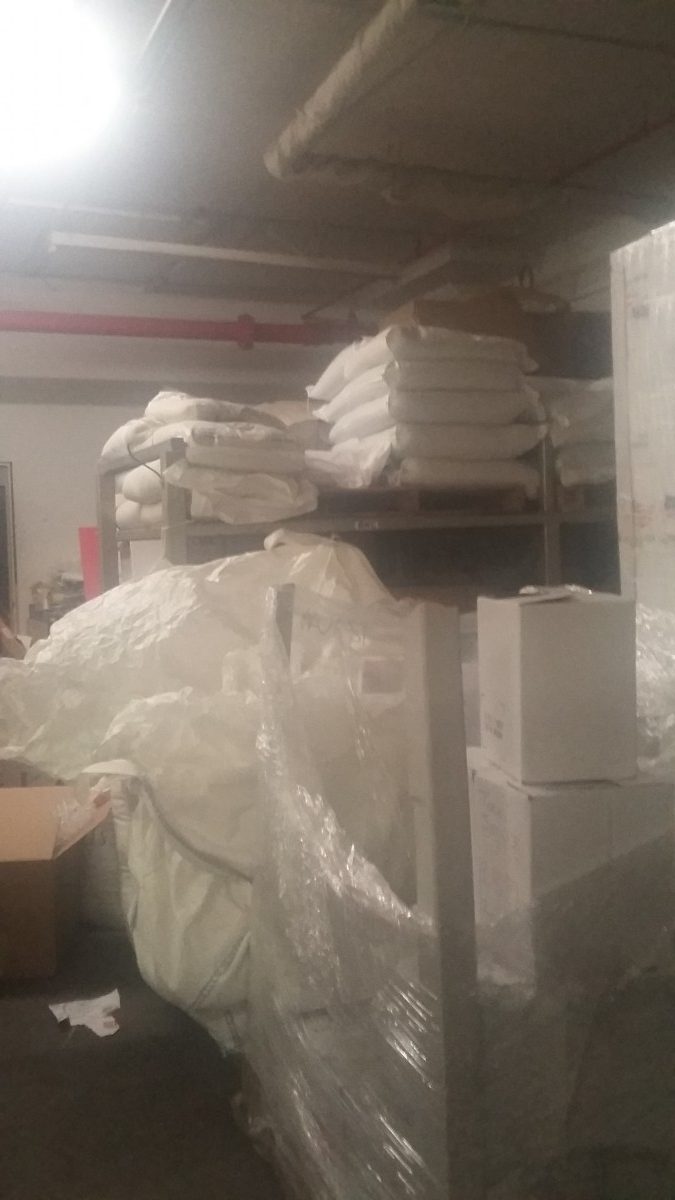
A woman in her Mid-to-late 20’s came with coiffed short brown hair with neat fade hair lines on the sides and back. She wore straight-cut jeans, a gray t-shirt and gray hoodie. He blue eyes looked stoney, almost cold, but with a sense of wisdom. She introduced herself as Rachel the Tour Guide. The tour began right in front of the tasting room where small barrels laid stacked. The distillery is small, and you can see that this facility has reached full capacity with the rows of barrels, packing/labeling area, office space, and machinery all in sight. She had a bottle of their American Whiskey already there and she handed us small tasting glasses with their brand on it. To smell and taste the whiskey she said, “I’m gonna breathe through my nose, but with my mouth open a little bit, that gives the alcohol somewhere to go so that you get a little more of the aroma. As you taste it you can let it travel through all the different parts of your mouth…similar to wine, you pick up different flavors from different parts of your taste buds. As you swallow you’re going to have a little bit of a burn, it is whiskey. After that burn it’s gonna rise forward with some more flavors on your tongue.” She said that this particular whiskey was made of equal parts wheat and malted barley with the addition of rye and corn for flavor. Rachel said that pre-commercialized whiskey was made in farms from left over grains and corn that could not be commercialized to then either sell or consume. She showed us the big sacks of grains they receive from Oechsner Farms, a “transitional” organic farm located by the Finger Lakes.
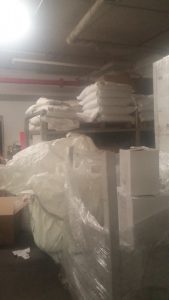
A half empty sack of wheat, and other bags of grains.

Because some of the newly purchased farms is not yet certified as an organic farm, the stillhouse does not have to pay all these fees as they would from a certified farm. The Wheat, Rye and Corn grains are from Oechsner Farms, but, “[The] Malt is sourced in a variety of different places, so you won’t actually get to taste our Single Malt Whiskey because it is not a farm product. As long as our distillery operations are over a certain threshold-75% of farm ingredients, than we can make additional spirits. So we actually make a [Due North] Rum that is not a farm product, we make Tokki Soju which is like a Korean rice based spirit. Unfortunately the law for our tasting space is not the same as the law for our production so those spirits all have to be farm spirits.” This is but a brief section of the extended law and regulations of the New York State Alcohol Beverage Control. To be more specific it is under Article 5 Sub Section 61 2-C(i),

“Only liquor manufactured primarily from farm and food products, as defined in subdivision two of section two hundred eighty-two of the agriculture and markets law, shall be used in the tastings.”

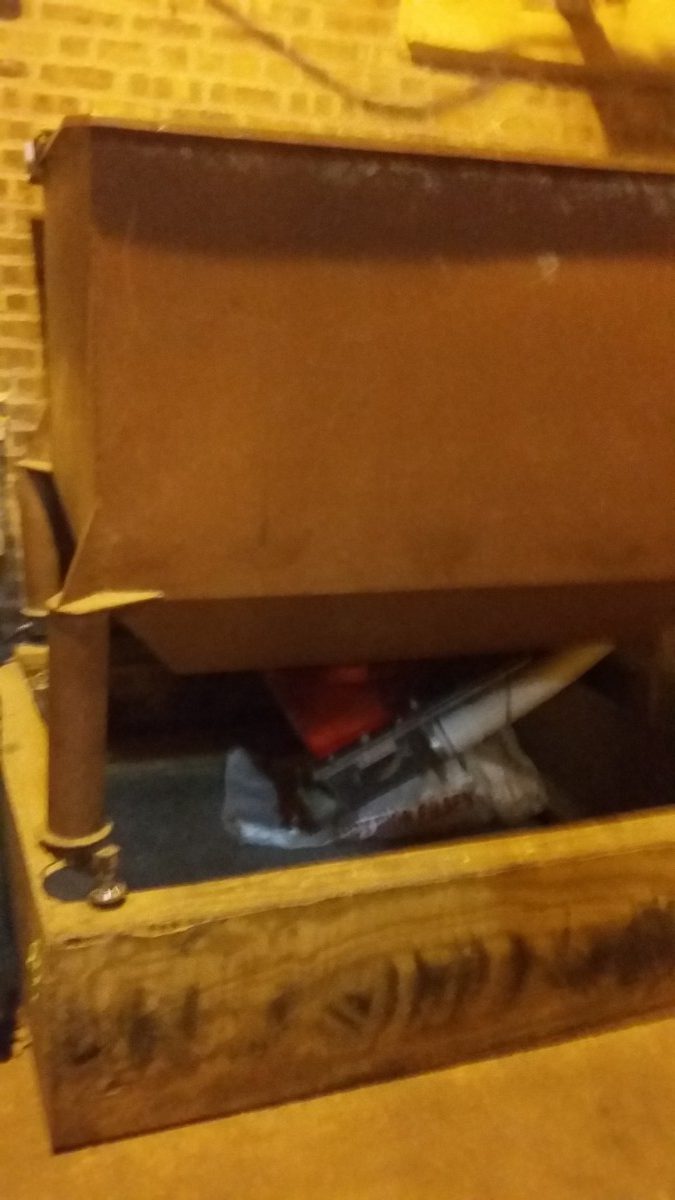
Rachel then pointed to a fire engine red metal box mounted on the wall with a key lock installed. It looked like an oversized mail box you find installed by the door of a house. She said that inside is where they keep the recipes to all of their liquors. All of the recipes are done by weight. She showed us their mill which was located outside. First the grain goes into the large container where it is weighed to scale a ton of grain for the recipe.
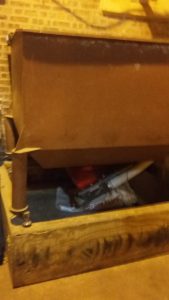
The container where they weigh the grains according to the recipes.
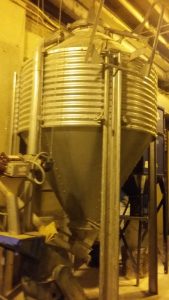
the mill where the grain is ground

It is ground in the mill to a size she describes as grits. She continued to talk about the fermentation process, “We’re taking a starch and we are breaching the hull, breaking it open, we’re gonna add water to it, cook it down to a sugar solution. And then we’re gonna add yeast, which eats sugar and creates alcohol.” The grist travels through the pvc pipe and goes back inside of the building, into a large vessel you have to go up some steps to reach the top. It was at this point that the second whiskey was sampled; the Bourbon. She explained that Bourbon is native to America and it has the same four grains as the American Whiskey, but it contains 55% corn. To be labeled Bourbon, “It has to be 51 percent corn, so you are going to have more sweetness…you’re also going to have to age it in new, never been used American Oak barrels, we actually do that for most of our whiskeys here. It has to be made in the United States.” She explained that bourbon can be made anywhere in the United States, “not just in Kentucky,” and like Kentucky and their Kentucky Straight, New York has its own categorization called Empire-Rye. It has to be made from 75% New York grains, distilled in New York, have to be distilled at no higher than 160 proof, put in a barrel at no higher than 115 proof, and aged for at least two years. Both are destination based like an appellation.

Through my research I found that the Empire-Rye just started last year when six leading distilleries in New York came together to create the Empire Rye Whiskey Association, dedicated to establishing a whisky style from New York that is high quality. The Van Brunt Stillhouse is the first outside distillery that has adopted this appellation standard.
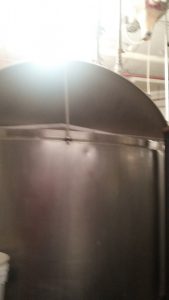
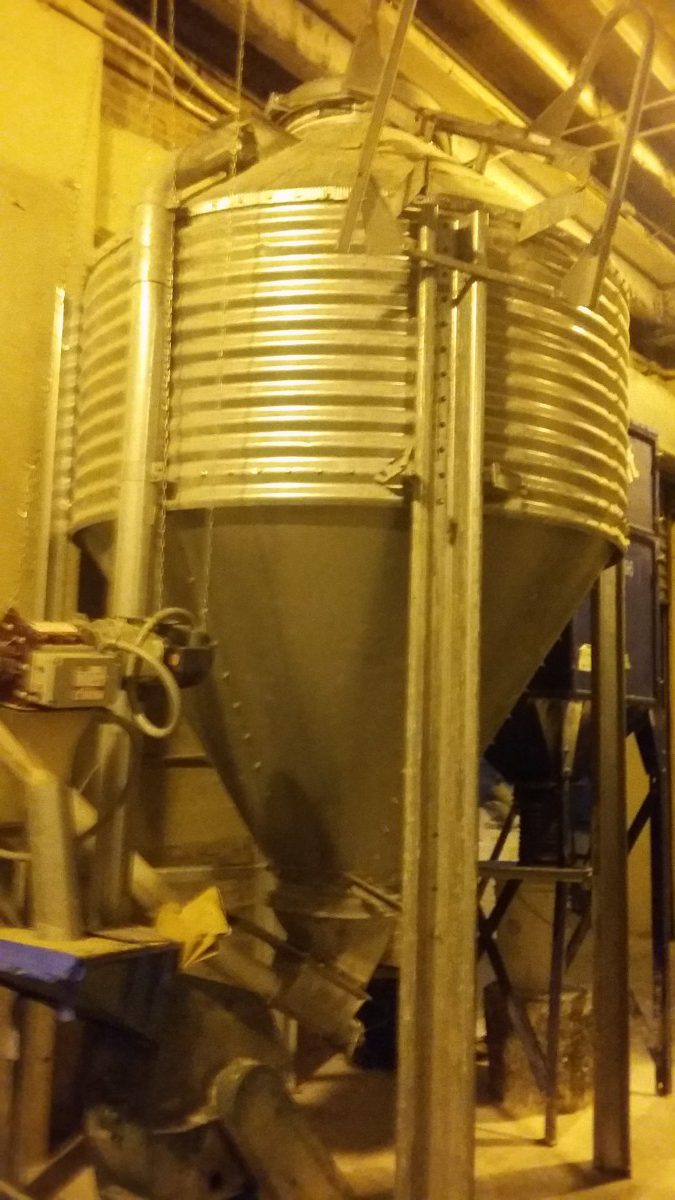
Large vessel where wort is made
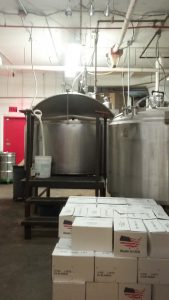
the vessel where wort is made

Back to the vessel, the grist is boiled for 8-16 hours, depending on the recipe, and the sugar content is constantly checked on until it reaches a certain level based on the recipe. Then the grist mixture cools so that it the yeast can ferment into wort. The wort is put into a copper kettle, a Bavarian Brandy Still (which they named Jolene) that has a single column still. The column has 6 little windows where you can see all the levels where the mash travels when heated up and the alcohol evaporates further through the machine where the coils cool down the gas which becomes liquid whiskey. The mash falls down into a small vat where it collects. The mash is put through a separator where the grain is collected for New York compost to collect and the water drains into the sewer. The liquor is collected in a large vat.
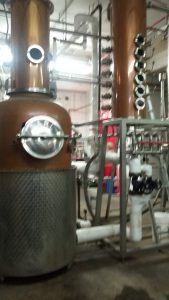
Copper Bavarian Brandy Still
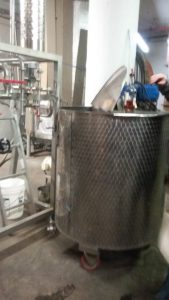
The small vat where the alcohol is collected

Rachel said that it is distilled twice. The first is called a “stripping run” which is the initial separation of the mash and a liquid alcohol they call “low wines.” The second distillation is called the “spirit run” which she explained as the process that can separate certain compounds from the low wines at different temperatures. “We have the heads, the hearts and the tails of that spirit run, so in the spirit run of the head section, we’re gonna get stuff like methanol. We don’t really want that. That’s not one of the alcohol compounds that we’re gonna want to take into our collection, so that were actually gonna either use for cleaning in the bar or we’re gonna dilute and just dispose of…The middle part, the hearts, that’s really the collection we’re looking to reserve.” She guided us to a large vat next the Bavarian Brandy Still that was no higher than five feet. In it there was a crystal clear liquid which is a highly refined which she said was about 150 proof. Based on our lecture in class, I asked if this was moonshine, and she said yes because it was rye that they distilled earlier. We then sampled their Van Brunt Rye Whiskey which is 75% Rye which is a United States requirement they abide by to be able to label this whiskey as Rye Whiskey. It was spicy and smooth as it went down.

The last part of the whiskey making process, is putting into new white oak barrels that are about 3 feet tall. These are small barrels that they purposefully choose because of space and to accelerate the aging process so there is more liquor to charred oak contact. In doing so the quality of the whiskeys is attained it still gets that smoky flavor and deep color within the two years that it is aged. Two years is good enough for them and the Rye Whiskey Association, but they also want to specialize in young whiskey. She showed us a white oak stave from an old barrel they used to age whiskey. You can see how deeply charred the barrels are and Rachel pointed out the line where the whiskey seeped through. The barrels are purchased charred, and it acts as a natural filter as it seeps through the staves which gives the whiskey its caramel color and oaky taste. The station where they label their bottles was simple.
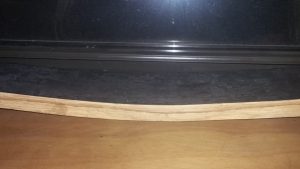
An old stave that shows the charred inside of a barrel and the line in the middle is the indicatorof how far the whiskey seeps in.

A long table, a roll of stickers, empty bottles and shelves. I could see some different shaped bottles which Rachel said were what they made for the bar such as Vermouth and Gin. This place really does what they can with what little space they have, and hope to expand. Although they plan to get a bigger place to work, this won’t change their original passion for representing young whiskey and bringing back New York’s lost grain-distilling history.

Beverage Control. Retrieved December 03, 2017, from https://www.nysenate.gov/legislation/laws/ABC/61

Empire Rye Whiskey Association. History. Retrieved December 03, 2017, from https://www.empirerye.com/history

Lyon, M. (2013, October). Van Brunt Stillhouse-History of Spirits in Red Hook, Brooklyn. MicroShiner, (Fall), 46-64. Retrieved December 03, 2017, from https://issuu.com/microshiner/docs/microshiner_autumn13_web

New York (State)., Office of the New York State Senate., Division of State Services. Alcoholic. Retrieved December 03, 2017,

Van Brunt Stillhouse. Retrieved December 03, 2017, from http://www.vanbruntstillhouse.com/